

October 13th, 2026
Travis Hill, Chair
Federal Deposit Insurance Corporation (FDIC)
550 17th Street NW,
Washington, DC 20429
Via email: comments@FDIC.gov
Jonathan V. Gould, Comptroller
Office of the Comptroller of the Currency (OCC)
400 7th St. SW,
Washington, DC 20219
Via: https://regulations.gov/
Re: Comment in Opposition to OCC and FDIC Notice of Proposed Rulemaking on Community Reinvestment Act Regulations [OCC Docket ID OCC-2026-0694; RIN 1557-AF57] [FDIC RIN 3064-AG31]
Dear Chair Hill and Comptroller Gould,
The National Community Reinvestment Coalition (NCRC) and the organizations signed on to this letter insist that the OCC and FDIC rescind the proposed changes to the regulations that implement the Community Reinvestment Act (CRA). The proposed rule would substantially alter how the OCC and FDIC evaluate community development, bank services, and support for nonprofit organizations. These changes will dramatically reduce both the quantity and quality of CRA-related community development and philanthropy to the detriment of community development practitioners, low-and-moderate-income (LMI) communities, small businesses, small farms, as well as banks. We are also very concerned these changes are being considered without an adequate analysis of their likely effects on LMI communities and on communities that have experienced historic discrimination and disinvestment such as communities of color and Native Lands.
NCRC is a network of more than 700 community-based organizations dedicated to creating a nation that not only promises but delivers opportunities for all Americans to build wealth and attain a high quality of life. We work with community leaders and policymakers to advance solutions and build the will to solve America’s persistent racial and socio-economic wealth, income, and opportunity divides, and to make a Just Economy a national priority and a local reality.
The CRA is key to the nation’s economic well-being. Congress passed the CRA in response to redlining to ensure that all communities have opportunities to build wealth. Redlining occurs when communities of color and low-income neighborhoods are intentionally cut off from lending and investment. One of the main goals of the CRA is to prevent redlining by regularly evaluating banks on the level and quality of their loans, investments, and services to borrowers and communities with LMI. The accountability the CRA creates has been successful at ensuring borrowers and neighborhoods with LMI have access to homeownership and entrepreneurship, with nearly $5 trillion in CRA-qualifying mortgages and small business loans made since 2010.[1] The CRA also benefits renters, with the CRA often referred to as the primary motivator of bank investment in Low Income Housing Tax Credits (LIHTC), with banks accounting for 85% of LIHTC investment dollars.[2]
In order for the CRA to remain an essential mechanism for ensuring that banks meet community credit needs, the OCC and FDIC (the agencies) must not finalize regulations that materially weaken that accountability without first demonstrating that changes are consistent with CRA’s purpose of meeting the credit needs of entire communities, including LMI neighborhoods. As discussed in more detail, NCRC and the organizations signed on to this letter believe that this proposal would significantly scale back CRA coverage, drastically reduce regulatory expectations of CRA activity, and weaken the CRA’s mechanisms for holding banks accountable for serving the needs of the entire communities they operate in. To summarize, NCRC and the organizations signed on to this letter oppose the OCC and FDIC’s proposed changes to the CRA regulations because they would:
- Raise asset thresholds to significantly roll back CRA requirements;
- Decrease the quantity and quality of community development financing from banks of all sizes;
- Decrease the importance of public participation, and the OCC’s strategic plan guidance proposed last year also threatens to significantly reduce community development financing;
- Define major product lines to roll back how lending performance is evaluated for all large banks;
- Fail to provide enough of an incentive to address heightened needs of Native Lands;
- Remove deposit products from CRA performance evaluations despite being a critical part of serving credit needs;
- Impose new grant restrictions that will impair collaboration and partnerships between banks and nonprofits;
- Use this rulemaking and parallel litigation to foreclose future CRA modernization;
- Improperly treat physical deposit-taking facilities as the outer boundary of a bank’s “entire community”; and
- Reduce consideration of discriminatory and illegal credit practices.
Our comment will also cover how the OCC and FDIC have not provided a detailed analysis of their proposed changes that includes estimates of reductions in community development financing, branches, data collection and reporting, or any assessment of whether the effects are concentrated in particular geographic areas or populations, including rural communities and communities of color.
We also urge the OCC and FDIC to extend the comment period to a total of at least 120 days. The proposal is more than 100 pages long in the Federal Register’s condensed format and would make significant changes to bank classifications, community development, branch and service evaluations, nonprofit grants, and other core elements of CRA implementation. Additional time is warranted given the breadth of the proposal and the importance of obtaining meaningful input from community organizations, civil rights groups, and other stakeholders that do not have dedicated regulatory staff. An extension would allow affected organizations to evaluate the proposal’s practical consequences, gather examples from the communities they serve, and provide the agencies with a more complete record on which to base any final rule. We therefore request that the agencies extend the October 13, 2026 comment deadline by at least 60 days.
Raised asset thresholds significantly roll back CRA requirements
Summary: The OCC and FDIC offer several proposals to significantly increase the asset thresholds that determine how most banks are analyzed for CRA compliance. Raising the small bank asset threshold by 142% from $412 million to $1 billion, as well as increasing the large bank threshold by over 500% from $1.649 billion to $10 billion, is a significant rollback of long established CRA performance factors. The agencies misleadingly claim that their proposed asset thresholds realign the distribution of large and small banks with the percentage of banks that fell into these categories when the current framework for evaluating a bank’s CRA performance was finalized in 1995. The agencies also fail to analyze the impact a reduction in community development, services, and small business lending data could have nationally, as well as in states with larger numbers of reclassified banks. NCRC and the organizations signed on to this letter implore the agencies to reconsider this proposal and leave the CRA’s asset thresholds intact in order to prevent a significant loss of community development loans and investments, a reduction in bank branches in LMI census tracts and tracts that are majority people of color, and diminished transparency in small business lending.
The proposed rule would raise the small bank asset threshold from $412 million to $1 billion, increase the large bank asset threshold from $1.649 billion to $10 billion, and reclassify banks between $1 and $10 billion as intermediate banks.[3] As a result, all OCC and FDIC supervised banks with assets between $412 million and $1 billion would be reclassified as small banks and no longer be evaluated for community development.[4] OCC and FDIC supervised banks between $1.649 billion and $10 billion would be reclassified as intermediate banks and no longer be subject to: separate evaluations of their community development loans and investments, a service test that analyzes branch networks, deposit products, and volunteer hours of bank staff, and requirements to annually report data on small business and community development lending.[5]
Based on current asset sizes, NCRC estimates this would roll back all community development requirements for over 800 banks, reducing the total number of all banks with CRA-related community development requirements by about 40%, as well as reclassifying over 400 large banks as intermediate.[6] This would change the CRA’s framework from one where roughly the largest half of all banks have community development requirements, to a regulatory system where less than one-third are evaluated for community development. Reductions in CRA-related community development could be felt nationwide, but as can be seen in the map below, it is likely to have a larger impact in rural and Southern states due to these states having more reclassified banks.[7]
Percentage of banks losing CRA-related community development requirements by state
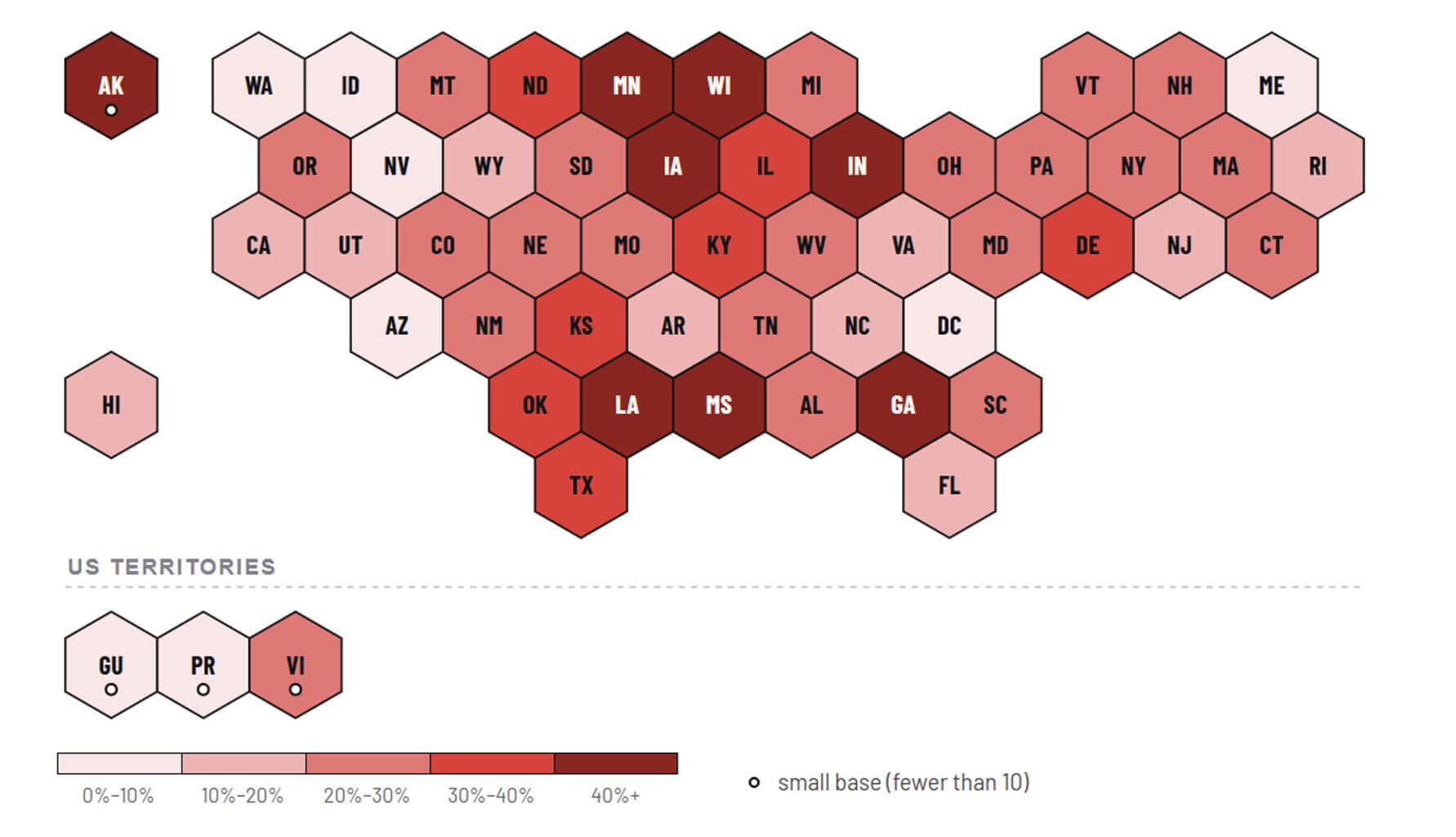
Sixteen states will lose a third of the banks currently evaluated for reinvesting in local community development projects. For example, Iowa will go from having 109 of its banks evaluated for community development to just 63, with Louisiana’s number dropping from 62 banks to only 32. This would also jeopardize at least $514 million in community development loans and investments annually, with reductions in community development financing likely being concentrated in rural and Southern states.[8]
Eliminating community development requirements for such a large swath of the nation’s banks, while drastically reducing the requirements for others, ignores Congress’s judgment that publicly-chartered banks across the country should be required to give back to the communities they serve. The OCC and FDIC’s proposal to reduce how over 1,200 banks are currently evaluated for CRA compliance runs counter to how Congress intended the agencies to implement the CRA. Congress held hearings over three days to debate the CRA. Sen. Proxmire, the author of the CRA, opened these hearings with the following remarks that indicate how essential community development is to CRA:
The bill is based on two widely shared assumptions.
No. 1: Government through tax revenues and public debt cannot and should not provide more than a limited part of the capital required for local housing and economic development needs. Financial institutions in our free economic system must play the leading role.
Second: A public charter for a bank or savings institution conveys numerous benefits and it is fair for the public to ask something in return.
Since the first CRA regulations were finalized in 1978, community development has always been a part of how banks are evaluated for serving community credit needs.[9] In order to downplay the magnitude of this change, the agencies deceptively claim that “the distribution of banks of different sizes across the performance tests and standards would be substantially similar to the proportions of their distribution in 1995.”[10] However, the agencies limited analysis of raising the asset thresholds contradicts this assertion by noting that “large banks represented approximately 19.6 percent of all banks” when the 1995 regulations were finalized, and that “approximately 2.4 percent of banks (86 banks) would have been large banks” if the threshold was currently at $10 billion.[11] This indicates the proposed threshold would classify as large only about ten percent of the banks that the current threshold defines as large, a significant reduction. The historical distribution of bank assets under the large bank threshold when established in 1995 and the proposed $10 billion threshold are more closely aligned, but the percentage of banks should be the preferred metric for analyzing an asset threshold. Maintaining a roughly equal percentage of total banks subject to the same requirements is less likely to disrupt local community development, and more likely to foster competition and innovation in serving community development needs by covering more institutions. Furthermore, even the largest banks are limited in the amount of loans and investments they can originate.[12]
Moreover, the OCC and FDIC ignore the fact that advances in management and technology render the 1995 distribution of banks into small and large no longer applicable for a rulemaking today. Given three decades of CRA experience since the 1995 regulations were established, the over 800 intermediate banks that would be reclassified as small now have the expertise and experience necessary to engage in community development financing. Given the reduced burden associated with compliance, and increased regulatory familiarization, there is less reason to avoid imposing community development requirements on institutions than there was in 1995.
Besides the threat of reduced community development caused by reclassifying over 800 banks as small banks, raising the large bank asset threshold to $10 billion could also significantly reduce bank demand for qualified investments. As stated earlier, based on current asset sizes this proposal would result in over 400 current large banks being redefined as intermediate banks that would no longer have a separate investment test that rates a bank’s CRA-eligible investments and philanthropy. In order to analyze the effect of a separate investment test on a bank’s investment activity, NCRC compared the amount of community development investments reported on CRA evaluations for banks that had moved from intermediate small bank exams to large bank exams due to asset growth. We found that the median amount of qualified investments for these banks while they were classified as intermediate was $540,000 per year per billion dollars of assets. That median rose to $2.2 million on their CRA performance evaluations when classified as a large bank. Measuring each bank’s own change, the median increase in community development investments for banks that moved up from intermediate to large was $1 million in investments per year per billion in bank assets. Applied to the 417 OCC and FDIC banks that would move the opposite direction under the proposed rule, from large to intermediate, we estimate community development investment losses of about $1.6 to $1.9 billion per year.[13] The OCC and FDIC have not conducted a similar analysis.
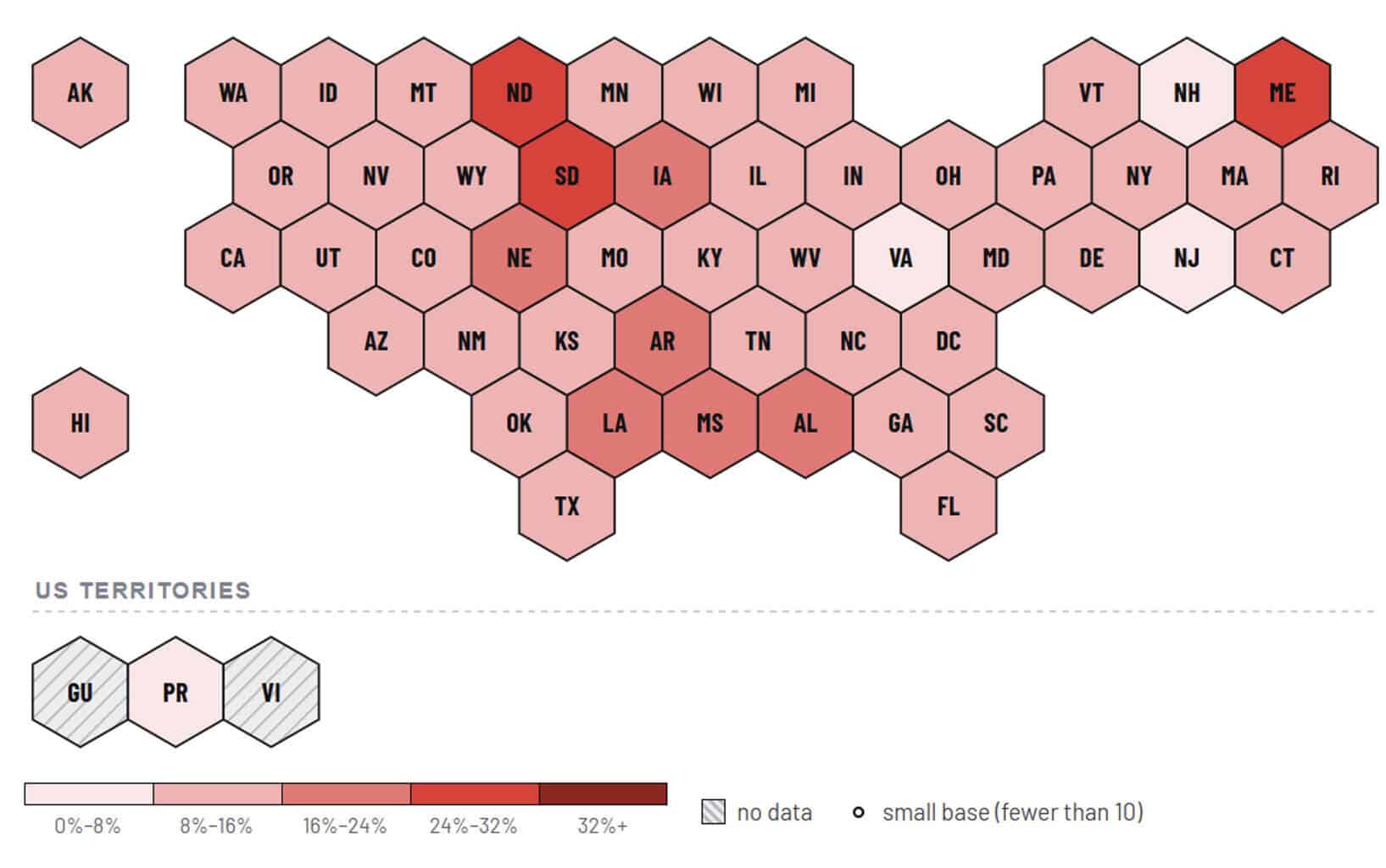
The OCC and FDIC’s proposal to raise asset thresholds will also reduce transparency of how banks serve small businesses and farms. CRA small business lending data collected from large banks is “some of the most extensive information currently available on small business lending.”[14] Lending gaps cannot be addressed when they are hidden, and nationally we would have had an 11% reduction in CRA small business lending data if the OCC and FDIC’s proposal to raise the large bank threshold to $10 billion was already in effect in 2024. Similar to lost community development, every state will be affected but six rural and Southern states will lose approximately a quarter or more of their CRA small business lending data.[15] Less data also makes it harder for examiners to put small business lending patterns into context. For example, Louisiana and Maine would both be left with less than 10 large banks with small business and small farm reporting requirements. Examiners may then minimize the weight they apply to an analysis of the remaining large bank’s small business and small farm performance because of a lack of suitable peers. Banks would also be disadvantaged as they would have less data available to compare their lending results to peer banks, particularly in highly affected states, making their CRA evaluations less predictable. The OCC and FDIC have not provided any analysis of how small business or small farm lending could be affected by their proposal to raise asset thresholds.
Percentage of small business data lost by state[16]
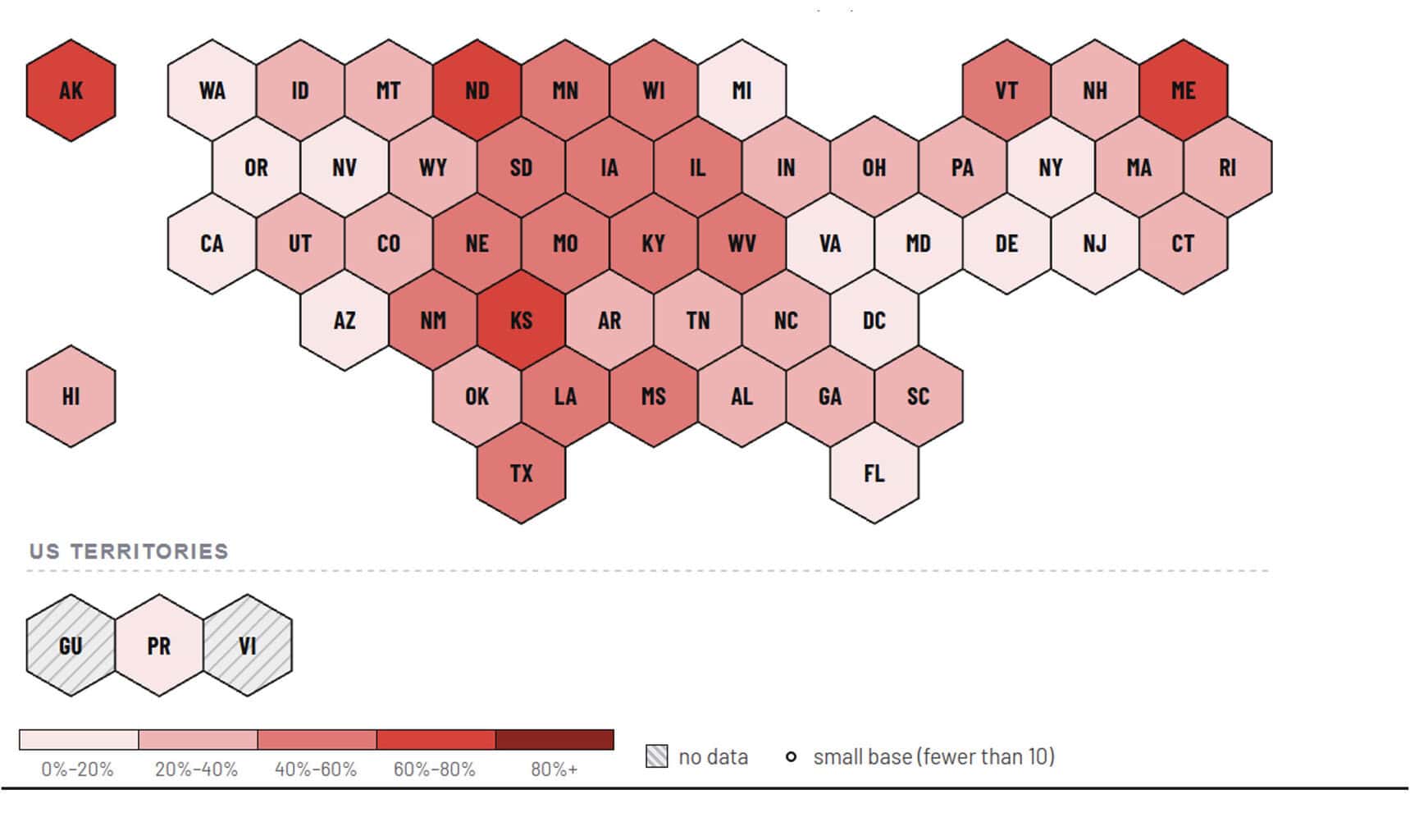
Eliminating the service test for over 400 banks could also lead to significant branch loss in both LMI census tracts, as well as census tracts that are majority people of color. More than 5,000 branches in LMI census tracts — 30% of all LMI branches nationwide — and more than 4,000 branches in majority-people-of-color census tracts — 23% of all such branches — would no longer be considered on CRA performance evaluations.[17] This will affect one-third of the branches in LMI tracts in twenty-eight states, as well as one-third of branches located in census tracts that are majority-people-of-color in twenty-two states. Studies have found that branches in CRA-eligible neighborhoods are less likely to close, and that branch closures significantly reduce local small business lending even when other bank branches are nearby, with noticeable declines in local small business loans for up to six years.[18] Yet again, the OCC and FDIC have not provided any analysis of how branching networks will be affected by their proposal to reduce the number of banks subject to the service test by roughly 60%.
Percentage of LMI branches losing CRA consideration by state[19]
The OCC and FDIC state they are raising asset thresholds to reduce regulatory burden, however they have not provided sufficient evidence of the severity of regulatory burden, or that the loss of community development, branches, and small business lending data will be outweighed by this reduction in burden. The OCC and FDIC note that “in prior CRA rulemakings, regulated depository institutions that are intermediate small banks have indicated that they spend approximately 200 hours on CRA compliance activities per year.”[20] Even if a bank has only two staffers working on CRA compliance, that comes out to just 8 hours per month on average.
The Federal Reserve Bank of St. Louis (St. Louis Fed) analyzed over 1,500 survey responses collected by the Conference of State Bank Supervisors (CSBS) from nearly 1,100 unique banks with assets below $10 billion.[21] These surveys asked banks to report compliance costs broken down by ten different categories of regulations.[22] The St. Louis Fed reported that CRA compliance costs came out to 7.2% of total compliance costs, and that all compliance costs averaged 7% of noninterest expenses.[23] Using those percentages it’s possible to calculate that total CRA compliance costs account for 0.5% percent of a bank’s noninterest expenses on average for banks below $10 billion in assets. Also, as the St. Louis Fed points out, these survey results may be biased towards reporting higher costs if “respondents have incentives to exaggerate reported regulatory burden or were influenced by knowledge that the survey was conducted by state regulators.”[24] CSBS’ 2025 survey of community banks also indicates that overall CRA compliance costs remain low. While the 2025 survey did not compare compliance costs to noninterest expenses, it still found that CRA accounts for just 10.2% of overall compliance costs.[25] A relatively small compliance cost considering that OCC and FDIC regulated banks below $1 billion in assets average over $514 million per year in community development loans and investments.[26]
The agencies also propose several different alternatives for asset thresholds, including raising the large bank threshold to as high as $30 billion and the small bank threshold to $10 billion.[27] Naturally, this would significantly increase the losses described already. For example, raising the small bank threshold to $10 billion would exclude roughly 88% of all banks from community development, branch, and small business reporting requirements.[28] Forty-two states would have their number of banks with local community development requirements reduced by half, and twenty states would lose at least two-thirds of the banks required to reinvest in local community development.[29] This would also jeopardize at least $26 billion in community development loans and $267 million in qualified investments per year.[30]
The agencies have also proposed using the Small Business Administration’s (SBA) size standards to set the small bank threshold at $850 million.[31] The agencies provide little detail on the benefits of this approach, other than noting that historically SBA standards would set higher thresholds than the CRA’s current method for updating asset thresholds based on inflation. The SBA’s size standards are designed to determine eligibility for government assistance and contracting opportunities and are not transferable to CRA regulations that are intended to ensure that banks are actively serving the credit needs of all communities in the markets they operate in.
The purpose of the CRA’s asset thresholds is to align regulatory expectations with the capacity of institutions. This follows the simple logic that larger institutions can reasonably be expected to do more to meet credit needs. The current approach of updating the asset thresholds annually based on inflation recognizes that the same asset levels will not indicate the same level of capacity as costs increase over time. However, neither the CRA statute nor nearly fifty years of regulatory precedent support the notion that only a small percentage of banks should be considered large and evaluated accordingly. NCRC and the organizations signed on to this letter urge the agencies to not move forward with any of their proposals to increase asset thresholds, and to adequately weigh the asserted compliance savings against the foreseeable and predictable losses.
Beyond raised asset thresholds, the proposed rule would also substantially decrease the quantity and quality of community development financing from banks of all sizes
Summary: The OCC and FDIC propose eliminating community development requirements and drastically reducing expectations of how much community development loans and investments a bank should aim for to receive a passing rating. In addition, changes to how economic development, revitalization and stabilization, and affordable housing are considered will diminish the impact and benefits of CRA-eligible community development.
As already discussed, community development has always been a significant component of the agencies’ evaluations of the extent to which banks serve the credit needs of entire communities. However, the OCC and FDIC’s proposal explicitly and implicitly minimizes regulatory expectations of community development performance. This comment has already covered at length how NCRC opposes the proposal to raise asset thresholds which would dramatically scale back the number of banks with any community development requirements, and allow more banks to have a simplified community development test.
In addition to raised asset thresholds, the OCC and FDIC have also proposed to remove the requirement that intermediate banks pass both their community development test and their lending test in order to receive an overall passing CRA rating.[32] There is no support for the OCC and FDIC’s claim that this will lead to banks performing better on both tests without the “artificial constraint” of having to pass both.[33] It is counterintuitive at best, if not just plain naïve, to expect intermediate banks to increase their community development even though they no longer have to prove satisfactory community development performance; and a de-emphasis of community development seems far more likely. NCRC and the organizations signed on to this letter urge the OCC and FDIC to keep the requirement that intermediate banks pass both tests.
Besides these obvious changes that eliminate or modify current requirements, the proposed rule could justify banks of all sizes sharply reducing their community development financing due to signaling from the OCC and FDIC that they will accept levels of community development financing far below current levels.
One of the ways the proposal would do this is through the geographic flexibility standard suggested for determining when banks may receive credit for community development outside of their branch networks. Current guidance states banks may receive favorable consideration for community development activities that benefit broader statewide or regional areas that include assessment areas “as long as the institution has been responsive to community development needs and opportunities in its assessment area(s).”[34] While NCRC has observed that many banks have been getting credit outside of their assessment areas, uncertainty about receiving this credit is often cited by organizations as an impediment to establishing bank partnerships and securing critical community development financing.[35] This lack of clarity is an obstacle for majority-Native American counties and rural counties that have fewer bank branches.[36]
The OCC and FDIC have proposed two options for clarifying when banks can get credit outside of their assessment areas. The first option offers that banks will be eligible for community development credit outside of assessment areas if the institution surpasses benchmarks of community development loans and investments compared to tier 1 capital. Specifically the equivalent of 0.625% of tier 1 capital devoted to annual community development loans for large banks – as well as 0.625% of tier 1 capital for qualified investments and grants – and 1.25% of combined community development loans, investments, and grants for intermediate, wholesale, and limited purpose banks.[37] The second option would rely “on the agencies’ supervisory experience and performance context factors in assessing a banks’ CRA performance to determine when a bank has conducted a sufficient level of CD activities in their assessment areas” and is practically the same as the current approach except that banks might have additional flexibility to get credit outside of assessment areas within states in which they maintain branches.[38] Neither should be adopted.
The OCC and FDIC state that whether a bank has met the geographic flexibility standard is “not a sufficient basis for concluding on a bank’s CD performance in an assessment area”, and that it is only intended for determining when a bank has done enough to merit consideration outside of their assessment area.[39] In spite of stating to the contrary, the OCC and FDIC nonetheless propose establishing an explicit benchmark that is dramatically below current performance. Even if it would be an unintended consequence, it is realistic that large banks could justify reducing their community development loans or investments down to 0.625% of tier 1 capital since the OCC and FDIC state this is what they would expect for a passing rating. 0.625% of tier 1 capital could also be used to set future performance goals and corresponding budgets and staff levels. This could result in drastic decreases in community development because many banks are well above these levels of community development financing.
NCRC analyzed the most recent CRA performance evaluations of all sixty-nine of the OCC and FDIC supervised banks in the top 100 banks by assets. Within this sample, we found that the median percentage of annual community development lending in assessment areas was 6.8% of tier 1 capital, and the median for annual qualified investments was 3.6% of tier 1 capital.[40] As you can see in the chart below, banks in the sample currently conduct approximately $102 billion annually in community development loans and investments inside their assessment areas. If each bank instead conducted only the amount necessary to meet separate thresholds of 0.625% of Tier 1 capital for community development lending and investments, combined activity would fall to approximately $14.9 billion annually – a decrease of approximately $87.1 billion, or 85%.
Potential community development loss among OCC and FDIC supervised banks in the top 100 banks by assets
Current annual AA activity | At 0.625% of Tier 1 | Decrease | % Decrease | |
CD Lending | $59.1B | $7.44B | $51.6B | 87.4% |
Qualified Investments | $42.9B | $7.44B | $35.5B | 82.7% |
Combined | $102.0B | $14.88B | $87.14B | 85.4% |
A reduction in community development loans and investments anywhere near $87 billion per year would be catastrophic for countless affordable housing developers, community development financial institutions, community service providers, and the neighborhoods they serve. The loss could be even more severe, as we have only analyzed what would occur if the sixty-nine largest OCC and FDIC supervised banks lowered their community development financing down to these levels. Also, there is no evidence that the OCC and FDIC are factoring into these benchmarks other changes they have proposed for community development, such as allowing consideration of community development loans from prior evaluation periods or eliminating the requirement that economic development financing create, improve, or retain jobs. Expanding what counts as community development inherently makes benchmarks based on previous requirements easier to achieve.
Benchmarks must be carefully constructed based on an analysis of previous performance levels to avoid setting a low standard that can be used to justify significantly scaling back community development financing. The OCC and FDIC have provided very little detail on how their benchmarks of community development loans and investments compared to tier 1 capital were determined. NCRC and the organizations signed on to this letter demand that the OCC and FDIC not move forward with this proposal since our communities simply cannot afford the drastic declines this proposal could support. We also insist that the OCC and FDIC clarify that the agencies will consider historical performance, and the financing levels of similarly situated banks, when evaluating a bank’s community development financing.
NCRC would support an alternative method for determining how banks can get community development credit outside of branch networks. As mentioned earlier, NCRC has heard that a lack of clarity around when banks can get credit outside of their assessment areas is often a hurdle for community development practitioners serving Native and rural communities that have less bank branches.
NCRC proposes a three part proposal for considering community development outside of assessment areas:
First, NCRC would favor allowing all large and intermediate banks to do 25% of their community development loans outside their assessment areas, as well as 25% of qualified investments and CRA-eligible grants, as long as banks do not decrease their previous average level of community development loans or investments in their assessment areas observed during their last evaluation period. Banks that decrease their average levels of community development financing would be eligible for ratings downgrades in the relevant assessment areas or states after considering performance context and the impact and responsiveness of the remaining community development loans, investments, or services.[41]
Second, banks that do more than 25% of their retail loans outside of their assessment areas, as well as wholesale banks that are not retail lenders, would be eligible to do more than 25% of their community development outside of branch networks provided they also did not decrease community development within their assessment areas.
Third, all banks would also be eligible to do 50% of their community development outside of assessment areas, provided they maintain average levels inside their assessment areas, as long as at least 50% of their outside community development was in high need areas. High need areas would include communities with less bank branches, which are markets less likely to be included in bank assessment areas. Specific types of high need areas would include rural counties, Native lands, persistent poverty counties, and census tracts with poverty rates of 40% or more.
For example, a bank that averaged $1 billion a year in community development loans inside its assessment areas during its last CRA evaluation period would be eligible for as much as $333 million per year in community development loans outside its assessment area as long as it maintained its average of $1 billion a year inside in its assessment areas. The same bank would also be eligible for as much as $1 billion per year on average outside its assessment areas, as long as at least $500 million per year was in high need areas and the bank maintained $1 billion per year within its assessment areas.
This would increase transparency for when banks are eligible for community development outside of their branch networks since banks are able to track how much of their community development is inside or outside assessment areas, as well as their historical levels of community development inside assessment areas. This also avoids any unintended consequences of setting a benchmark that banks above that threshold could use to justify reducing their community development since this approach uses previous performance levels as institution specific baselines. Finally, our proposal provides more flexibility for banks that do more business outside of their branch networks, as well as greater flexibility to serve high need areas.
The proposed rule would also reduce the quality and impact of CRA eligible community development. The OCC and FDIC have proposed to expand the definition of economic development by eliminating the “purpose test” that requires loans or investments to create jobs for workers with LMI, or in LMI communities, to qualify. The proposal focuses on businesses, not communities. Financing could qualify as economic development based primarily on the size of the business and whether the financing expands, improves, or preserves the business’s productive capacity, physical presence, or employment base.[42] NCRC is concerned this change weakens the connection between economic development and the people and communities the CRA is intended to benefit. Specifically, a loan that helps a qualifying business expand does not necessarily create jobs or address the needs of LMI communities.
The OCC and FDIC justify eliminating the purpose test in part on their conclusion that the current standard is subjective and does not adequately account for job quality.[43] Those concerns may justify improving the existing standard, but they do not support eliminating the connection between economic development credit and demonstrated benefits for workers or communities. Under the proposal, the OCC and FDIC would assume financing that expands or strengthens a qualifying business will benefit the surrounding community, without requiring the bank to demonstrate that those benefits reach workers or LMI neighborhoods. The OCC and FDIC attempt to maintain some of the employment considerations by including “employment bases” as one option for what the financing must benefit, as well as adding that financing must be “not reasonably likely to result in a reduction in jobs at the business or farm.”[44] However, financing would now qualify regardless of whether it benefits “employment bases” as long as it enhances or preserves either a business’s productive capacity or physical location. Furthermore, the OCC and FDIC offer that “financing for the purpose of purchasing technology that would replace employee functions without simultaneously resulting in hiring new employees” would not qualify. However, it appears that such financing would qualify if new employees were hired, even if new employees were paid less and received fewer benefits. Finally, the OCC and FDIC appear to minimize the effect of this change by inaccurately claiming that eliminating the purpose test is “consistent with the language in the current rules (which do not expressly reference the purpose test in the Interagency Questions and Answers),” when the Interagency Questions and Answers explicitly discuss the purpose test as a requirement for qualifying as economic development.[45]
Similar to eliminating the purpose test for economic development, infrastructure projects generally receive CRA credit under the revitalization and stabilization category of community development only when they keep or attract residents or businesses in a CRA-eligible tract, such as a LMI census tract, distressed nonmetropolitan middle income tract, or designated disaster area.[46] The proposal would change this standard by allowing credit for infrastructure that “benefits or serves” a CRA-eligible area, even when the project delivers little meaningful benefit to LMI residents and does not help preserve or strengthen the community. This opens the possibility of a bank receiving CRA credit for financing a large regional infrastructure project that only incidentally serves a LMI neighborhood, even if most of the project’s benefits flow to affluent communities or private companies. For example, a data center located in an LMI tract may qualify despite creating few permanent jobs and providing little direct benefit to residents. In addition, a large-scale infrastructure project that could increase rents and property values and ultimately displace LMI residents would qualify, even if it does not include affordable housing and other aspects that seek to avoid displacement.
NCRC and the organizations signed on to this letter call on the OCC and FDIC to maintain the purpose test for economic development, and that revitalization and stabilization activities must attract or retain residents or businesses to CRA-eligible census tracts. The OCC and FDIC should also analyze what additional activities would qualify under the new definitions, where those activities are likely to occur, and whether financing could shift away from activities that create or retain jobs, residents, or businesses in LMI communities. The OCC and FDIC should also explain why eliminating the existing connection to these outcomes is consistent with CRA’s requirement to assess a bank’s record of meeting the credit needs of their entire communities, including LMI neighborhoods.
The OCC and FDIC’s proposed changes to the definition of affordable housing would also dilute benefits to renters with LMI. The OCC and FDIC have offered a new definition of unsubsidized affordable housing, also referred to as naturally occurring affordable housing, that would allow CRA credit for financing rental properties if the median rents do not exceed 30 percent of 80 percent of the area median income, or 30 percent of 120 percent of the area median income in “high-cost” areas.[47] These thresholds are meant to identify rents that would be affordable to a household with either moderate- or middle-income respectively. However, previous interagency guidance is clear that it would “be inappropriate to give consideration to a project that exclusively or predominately houses families that are not low- or moderate income simply because the rents or housing prices are set according to a particular formula.” The interagency guidance is meant to prevent CRA consideration going to buildings that are not actually renting to tenants with LMI. However, that is exactly what the proposed definition would allow. The proposed regulatory text states that to qualify as affordable rental housing it must “likely to be inhabited by low- or moderate-income individuals or families as demonstrated by median rents that do not and are not projected at the time of the transaction to exceed 30 percent of 80 percent of the area median income” (emphasis added).[48] The “as demonstrated by” phrase defines how the regulation determines if the housing is “likely to be inhabited by low- or moderate-income individuals” solely based on a rental formula. It is possible to infer that this language was designed to assure the reader the new definition is in alignment with previous guidance, when in fact it contradicts it.
NCRC supports the goals of regulatory clarity, but not at the expense of losing focus on renters with LMI who are by definition the most burdened by a lack of affordable housing. The 2023 CRA rule’s approach to defining naturally occurring affordable housing included the formula that rent must not exceed 30 percent of 80 percent of the area median income, but also required that the housing meet at least one of the following criteria in order to stay consistent with agency guidance: located in an LMI census tract, located in a census tract in which the median income of renters is LMI and the median rent does not exceed 30 percent of 80 percent of the area median income, the housing is developed in partnership with a nonprofit organization with a stated mission of providing affordable housing to households with LMI, or the bank provides documentation verifying that a majority of its tenants have LMI.[49] Without these criteria, affordable housing risks being redefined as cheaper rent for the middle and upper income.
Furthermore, the 2023 rule’s definition also had more specific language for ensuring that rents stayed affordable, specifically “the monthly rent as underwritten by the bank, reflecting postconstruction or post-renovation changes as applicable, does not exceed 30 percent of 80 percent of the area median income”, as opposed to the OCC and FDIC’s “median rents that do not and are not projected at the time of the transaction to exceed 30 percent of 80 percent of the area median income.”[50] NCRC and the organizations signed on to this letter insist that the OCC and FDIC adopt the 2023 CRA rule’s definition of naturally occurring affordable housing in order to better align with previous agency guidance. We would also support consideration of housing with rents that do not exceed 30 percent of 50 percent of area median income in order to award CRA credit and incentivize financing for rental housing affordable for tenants with low-incomes. The OCC and FDIC should also issue guidance similar to what New York’s Department of Financial Services (DFS) released that directs lenders to conduct due diligence of landlords and property owners, assess if appraisals are accurate, and analyze loan terms and conditions to make sure that current rents would not have to increase substantially in order for property owners to repay loans.[51] NCRC also recommends that the OCC and FDIC adopt DFS’ regulatory approach to high cost areas. DFS regulations implementing New York’s state CRA law also allows for consideration of middle-income housing in high-cost areas, but with the caveat that middle-income housing is considered in addition to, and not in lieu of, housing for households with LMI.[52]
The OCC and FDIC are decreasing the importance of public participation, and the OCC’s strategic plan guidance proposed last year also threatens to significantly reduce community development financing
Summary: The OCC and FDIC are proposing to remove responsiveness to written comments as a factor for evaluating small and intermediate banks. Also, proposed changes to the strategic plan process allow banks to get pre-approval of strategic plan goals before public comment periods, in direct contradiction to current agency guidance. The elective goals for strategic plans that the OCC proposed last year are also well below current levels and risk massive reductions in community development financing per year.
The OCC and FDIC are proposing to remove consideration of how a bank responds to written complaints about its performance when rating a small or intermediate bank’s CRA compliance.[53] The OCC and FDIC justify this change because they propose a new definition of responsiveness, and they believe this would create redundancy.[54] The OCC and FDIC would define responsiveness as:
(1) The innovativeness, flexibility, complexity, or impact of a retail lending activity, retail banking service, or community development activity, as applicable; and (2) The quality of a bank’s retail lending activities, retail banking services, and community development activities as demonstrated, for example, by the success of the activity or service in meeting an identified community development or credit need.[55]
Responding to written complaints would not necessarily be covered under this definition. For instance, a commenter may highlight how a bank is significantly trailing the market in mortgage or small business lending and identify how the high costs of an institution’s loan products make it a less attractive option for borrowers. Banks should be expected to consider these types of comments, and this would not be the same as “meeting an identified” need. Under the OCC and FDIC’s proposed changes, a bank could disregard the comment and continue to offer expensive loan products and point to the offering of any loan product as evidence of responding to an identified need, or point to other products the bank offers as meeting needs. Removing consideration of responsiveness to comments will only increase confusion about whether banks need to consider feedback from the public. NCRC and the organizations signed on to this letter call on the OCC and FDIC to keep consideration of responses to written complaints as a component of evaluating performance of small and intermediate banks, and to explicitly extend this to large banks as well.
The OCC and FDIC are also encouraging more banks to pursue strategic plans, and diminishing the importance of public feedback on the development of these plans. The OCC and FDIC have proposed to allow banks to prefile strategic plans with regulators to get feedback on the merits of a strategic plan’s proposed goals before receiving public comments.[56] That is a meaningful change from current interagency guidance, which permits consultation about process and completeness, but says regulators should not advise banks on the merits of the plan or adequacy of its goals prior to the public comment period.[57] This risks relegating local community development practitioners, elected representatives, and other stakeholders to bystander roles, as banks effectively lock in their levels of CRA activity for up to five years before the public has an opportunity to weigh in.
The OCC and FDIC also ask if they should provide elective goals that banks could use to develop strategic plans, similar to guidance the OCC proposed last year.[58] In that guidance, the OCC proposed elective strategic plan goals for combined annual community development lending and investment equal to just 0.12% to 0.24% of assets as eligible to receive a Satisfactory rating depending on the size of the bank. Outstanding goals ranged from 0.20% to 0.40% for banks under $30 billion.[59] Those figures are strikingly low compared with current and historical performance levels.
NCRC analyzed Federal Reserve data from CRA examinations and found that OCC-regulated banks with $30 billion or less in assets had median combined community development lending and investment of approximately 0.70% of assets annually from 2016 through 2020.[60] For banks with $1 billion or less, the median was 0.64%.
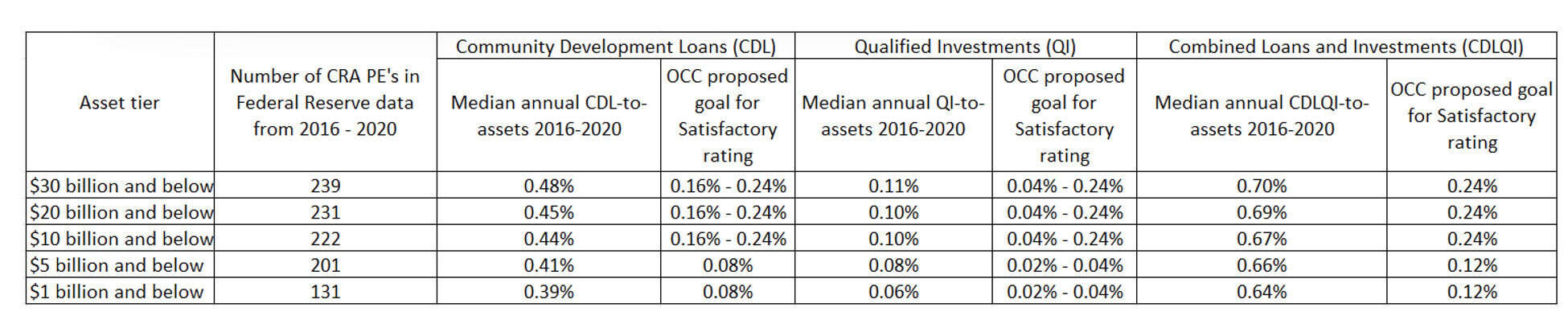
We estimate that if just 10% of OCC-regulated banks near median historical performance had instead reduced their activity to the OCC’s proposed 0.24% Satisfactory level, community development financing would have declined by nearly $100 million per year during that period.[61]
To illustrate how low the OCC’s proposed strategic plan benchmarks are relative to current performance, NCRC also applied the OCC’s benchmark percentages to a sample of the sixty-nine OCC and FDIC supervised banks among the 100 largest U.S. banks by assets for modeling purposes.[62] As detailed in the chart below, those banks currently conduct approximately $59.1 billion per year in community development loans and $42.9 billion per year in qualified investments inside their assessment areas, resulting in about $102 billion annually in total.
Potential community development loss among OCC and FDIC supervised banks in the top 100 banks by assets
Current annual AA activity | At Elective Goal Levels | Decrease | % Decrease | |
CD lending | $59.1B | $24.8B | $34.3B | 58.0% |
Qualified Investments | $42.9B | $6.2B | $36.7B | 85.5% |
Combined | $102.0B | $31B | $71B | 69.6% |
Measured against bank assets, the current median annual community development lending is approximately 0.69% of assets, more than four times the proposal’s 0.16% strategic plan benchmark, while median qualified investments are approximately 0.32% of assets, eight times the proposal’s 0.04% benchmark. If the banks in our sample reduced their activity to those two benchmarks, annual community development lending and investments would fall from approximately $102 billion to $31 billion, a loss of roughly $71 billion per year.
NCRC does not assume that every bank would reduce its activity to those levels. But, similar to our concerns about the proposed geographic flexibility standard, the gap shows that the benchmarks are far below what banks do today and could encourage much lower levels of community development activity in the future. The real concern is that regulators would be establishing an explicit target that banks can reasonably understand as sufficient for receiving a passing CRA rating. Once the OCC and FDIC tell the banks they regulate that a particular level is satisfactory, it’s reasonable to expect that some institutions will adjust their community development dollars to be set at, or just slightly above, those thresholds. NCRC, the organizations signed on to this letter, and the communities we serve simply cannot afford these massive reductions in community development financing. We demand that the OCC and FDIC provide significantly more detail on how these benchmarks were determined, and raise them accordingly as our analysis indicates.
Both proposed options for defining major product lines roll back how lending performance is evaluated for all large banks
Summary: The agencies are proposing to only review a bank’s largest two product lines, or to review different product lines in particular assessment areas determined by factors such as a bank’s business strategy and capacity. Both approaches result in less lending being evaluated for how well it reaches borrowers with LMI, LMI census tracts, small businesses, and small farms. The OCC and FDIC have offered very little analysis of the effects of minimizing lending reviews, in particular the effect that only analyzing a bank’s largest two product lines could have on small farm lending. A better approach would be to maintain the current practice of evaluating a large bank’s mortgage, small business, and small farm lending across their assessment areas based on demographics of the assessment area and performance of other lenders. The OCC and FDIC’s proposed definition of lending done on an incidental basis could also be applied to defining major product lines. This approach is preferred over the major product line options offered by the OCC and FDIC since it would avoid the potential for disincentivizing loans and reducing transparency of how banks will be evaluated locally.
Under the current rules, a large bank’s lending test includes an evaluation of three types of retail loans: mortgage, small business, and small farm – as well as consumer lending if it makes up a majority of a bank’s overall lending or a bank opts for consumer lending to be included.[63] The OCC and FDIC are proposing two options for defining a bank’s “major product lines,” with the goal of minimizing both the type and amount of lending reviewed for CRA performance.[64] Neither should be adopted.
The first option would define a bank’s largest two categories of loans as their major product lines. For example, a bank would no longer be evaluated for small farm lending if mortgage and small business lending were their largest categories of loans. The two largest loan categories would be calculated based on total lending, not in reference to a specific assessment area. The second option would define major product lines at the assessment area level and allow for different types of lending to be reviewed in different assessment areas, such as small farm lending in rural assessment areas and small business lending in urban ones. Neither option would include consumer lending unless it was a majority of a bank’s overall lending or the bank chose for it to be included, even if consumer lending was one of the two largest types of loans.[65]
The first option would significantly burden rural communities. Small farm lending tends to be the smallest retail product line for most banks, meaning small farm loans would be excluded most often from CRA reviews. However, banks that do a larger amount of mortgage and small business loans are still a significant source of capital for small farms. In 2025, 43% of all bank farm loans came from banks whose farm lending accounted for less than 14% of their domestic loans.[66] The OCC and FDIC have also proposed to incorporate major product lines into how banks determine their assessment areas, modifying the current regulation to only require banks to include geographies where they have “originated or purchased a substantial portion of its loans in its major product lines.”[67] Banks may respond by decreasing the number of rural counties or census tracts in their assessment areas, disincentivizing retail lending as well as community development financing in agricultural communities.
The second option would also decrease the type of lending evaluated during CRA evaluations, while also adding unnecessary confusion and ambiguity. Under this approach, the types of loans evaluated could vary by assessment area based on a bank’s overall lending and business strategy, the bank’s capacity to lend in a specific assessment area, and the extent to which the “product line meaningfully contributes to the banks or savings association’s record of meeting the credit needs of that assessment area.”[68] The agencies provide the example of a bank that is primarily a mortgage lender but also offers small farm loans in its rural assessment areas. In this example, the agencies stated that small farm lending in the rural area “could” be examined.[69] In contrast, under the current approach, that bank’s mortgage and small farm lending would automatically be considered on a bank’s CRA performance evaluation, as well as small business lending if the bank was an active commercial lender. Under this proposed option, community members and banks would have to make educated guesses for which loans would be reviewed in a specific assessment area, such as which types of loans “meaningfully contributes to the banks or savings association record.”
The proposed regulatory text adds to this ambiguity since it refers to a bank’s “overall lending volume and business strategy” which implies that product lines in specific assessment areas will be determined by the types of lending a bank is most active in when considering all of its markets. This sounds more similar to the first option, but the example provided in the preamble implies that the types of lending considered would vary based on the type of loans made in that assessment area.
This could also permit a short-sighted view of credit needs of a particular assessment area. For instance, the example provided focuses on small farm lending in rural areas. Small farm lending is certainly important in rural areas, but small business lending is also a major credit need. In fact, according to US Census data only 1 in 10 workers in rural communities are employed in traditional rural industries such as agriculture, forestry, fishing, hunting, or mining.[70]Also, determining product lines of a specific assessment area based on “capacity to lend in that assessment area” is redundant as banks are already allowed to adjust their assessment areas to only include geographies a bank “reasonably can be expected to serve” given factors such as an “assessment area that otherwise would be extremely large, of unusual configuration, or divided by significant geographic barriers.”[71] If a county or census tract is included in a bank’s assessment area then by definition it is a geography the bank has the capacity to serve, and the bank’s lending to borrowers with LMI, LMI census tracts, small businesses, and small farms in that market should be evaluated.
NCRC and the organizations signed on to this letter favor a simpler alternative approach that largely maintains the current framework of evaluating a large bank’s mortgage, small business, and small farm lending, as well as consumer lending for banks that specialize in consumer loans. The OCC and FDIC have offered a definition of lending done on an “incidental basis” as a means of determining an institution’s eligibility for a limited purpose or wholesale bank designation. Banks with these designations are excused from a typical lending test as they do not make enough retail loans to properly evaluate in the case of wholesale banks, or are limited to a narrow product line such as auto loans or credit cards in the case of limited purpose banks.[72] The OCC and FDIC have proposed to define lending in a specific product line as done on an incidental basis if it is not a product line the bank advertises to the public, and the bank makes these loans on a very limited basis, as measured by being less than five percent of an institution’s total lending in both of the prior two calendar years.[73] We propose that this same definition could be applied to large banks to determine their major product lines. The five percent threshold would be determined at the institution level to encourage banks to seek out lending opportunities in each of their major product lines throughout their assessment areas. This approach would better satisfy both objectives of ensuring that performance evaluations continue to analyze a bank’s major lines of business, while also clarifying when there are not enough loans to conduct a reasonable analysis.
This preferred approach improves on a similar proposal the OCC and FDIC put forward of establishing 30 loans as the minimum amount of lending needed to review lending in a specific assessment area.[74] If a product line such as mortgage lending or small business lending is part of a bank’s overall business strategy, the regulations should not excuse a large bank for making less than 30 loans in that product line in a given assessment area over a multi-year evaluation period. In that example, those banks would be eligible for needs to improve ratings after considering demographics of the market and lending results of similar lenders in the market.
The OCC and FDIC also offer no analysis of the impact of reducing the types of lending reviewed in CRA evaluations, such as which types of retail lending are likely to receive less scrutiny, or how this would affect CRA reviews in the most impacted communities. Instead the agencies “preliminarily believe the potential negative impact is unlikely to be significant because, in many instances, banks provide those loans primarily for business reasons rather than to address CRA obligations.”[75] NCRC believes this reveals a critical misunderstanding of the purpose of the CRA. Congress passed the CRA to establish that banks have a “continuing and affirmative obligation” to serve credit needs of the entire communities where they are chartered to do business. Congress’ intent in passing the CRA is to ensure that a bank’s business model and strategies include the underserved, such as families with LMI, small businesses, and small farms. NCRC and the organizations signed on to this letter insist that the OCC and FDIC not move forward with either of their proposed options for reducing the types of lending reviewed on CRA performance evaluations to maintain a review of the widespread availability of each of a bank’s business lines. We also request consideration of the proposed alternative outlined above.
Finally, NCRC insists that the OCC and FDIC not modify the definition of affordable housing to include mortgage lending for banks that do not have mortgage lending as one of their major product lines. This would artificially increase an institution’s amount of community development financing and potentially allow banks to decrease their previous levels of community development financing without their CRA rating being affected. The OCC and FDIC have sought input on this approach, but provided no rationale for why this would be an improvement. NCRC suspects the OCC and FDIC are offering this as a way of minimizing the possibility of their major product line approach disincentivizing mortgage lending for banks that are more active as small business or small farm lenders. NCRC disagrees with the OCC and FDIC’s major product line approach since it diminishes the CRA’s ability to ensure that all aspects of a bank’s lending are widely accessible, and modifying the definition of affordable housing to include retail mortgage lending would also weaken the CRA’s impact.
Changes for Native Lands fail to provide enough of an incentive to address heightened needs
Summary: The OCC and FDIC acknowledge that Native Lands do not have the same access to lending, community development, and banking services. Yet, the proposed rule repeals provisions from the 2023 rule that address these disparities through additional consideration for branches and further incentivizing community development activity benefiting Native communities.
Native Lands exhibit significant disparities in access to capital and bank services. For example, NCRC has found that the average census tract on tribal land received just five small business loans, compared to 82 such loans made on average in non-tribal tracts.[76] The agencies have also found that majority-Native American counties have an average of two bank branches compared to the nine-branch average in rural counties and well below the 27-branch average for all counties.[77] The OCC and FDIC acknowledge that “communities in Indian country or other Tribal and native lands face significant and unique CD [community development] challenges”, but their proposal would rescind important provisions in the 2023 CRA rule.[78]
The OCC and FDIC are offering to include “Indian country or other Tribal and native lands” as an eligible geography under the revitalization and stabilization category of community development. While NCRC does not object to this, the OCC and FDIC should also maintain the provisions of the 2023 CRA rule that award additional qualitative consideration for bank branches on Native Lands, and create an impact and responsiveness factor for community development activities that “benefits or serves residents of Native Land Areas.”[79] CRA performance evaluations under the 2023 rule would have included how much of a bank’s community development activities fit into each impact and responsiveness factor, creating a meaningful incentive for banks to pursue community development in Native Lands and other high need areas in order to avoid having nothing to report in specific categories.[80] The 2023 rule also would have made it easier for banks to pursue community development financing outside of their branch networks by not requiring banks to first demonstrate they have adequately served their assessment areas and instead to weight activities inside and outside facility-based assessment areas based on where a bank lends and takes deposits.[81] Finally, after consulting with our Native members and partners, NCRC encourages the OCC and FDIC to use the 2023 rule’s definition of Native lands as it is more comprehensive.[82]
Experience with other federal programs, such as the Low Income Housing Tax Credit, the Department of Energy’s Tribal Energy Financing Program, and the Farm Credit System, also demonstrate that simply making financing available has not been enough to generate substantial lending or investment on Native Lands.[83] NCRC and the organizations signed on to this letter call on the OCC and FDIC to use the CRA framework to do more to address the heightened economic disparities affecting Native Lands, including adopting the impact and responsiveness factors approach detailed in the 2023 CRA rule.
Deposit products are a critical part of serving credit needs and should remain a part of CRA performance evaluations
Summary: Deposit products are an important part of how banks serve a customer’s credit needs, as well as a bank’s ability to lend. Maintaining a CRA review of deposit products is beneficial to both consumers and banks.
The OCC and FDIC are proposing to remove any evaluation of deposit products, such as checking or savings accounts, “in light of the agencies’ statutory mandate to assess a bank’s ‘’record of meeting the credit needs of its entire community.’”[84] Congress expressly recognized that the convenience and needs of communities include both credit and deposit services. However, when Congress passed the CRA they left it to the regulatory agencies to determine how banks would be evaluated for meeting credit needs. Basically, the OCC and FDIC’s position is that there is not enough of a connection between deposit needs and credit needs to justify a review of a bank’s deposit products. This is wrong.
The fact that deposit products facilitate access to credit is widely acknowledged. The American Bankers Association has noted how “access to a simple transaction account can be a first step toward long-term financial security.”[85] Rodney Hood, Republican-appointed as Acting Comptroller of the Currency, has spoken about how “a bank account is a starting point in financial inclusion, not an end point,” and how that, “first bank account can lead to longer-term savings, access to credit, 401(k) and other retirement accounts, and wealth-building opportunities.”[86] When the agencies finalized the 2023 CRA rule they noted that “while the operational provisions of the CRA instructs the agencies to evaluate a bank’s record of meeting the credit needs of its communities, the agencies have found that there is a sufficient nexus between deposit products and the provision of credit.” The agencies then cited several studies showing that customers in LMI communities are more likely to receive loans if they have deposit accounts that enable them to save, improve their credit scores, and otherwise become ready to receive loans.[87]
Furthermore, banks also rely on deposits in order to make loans. Many banking trade groups are currently lobbying Congress to close loopholes in the GENIUS Act they believe threaten their deposit base and ability to make loans.[88] As they assert “every deposit represents a home loan, a small business loan or an agricultural loan,” and, “policies that undermine bank and credit union deposits destroy local lending.”[89] Another threat to a bank’s deposit base is the cost and features of checking accounts themselves. The FDIC’s 2023 Survey of Unbanked and Underbanked Households found that not having enough money to meet minimum balance requirements was the most cited reason why unbanked households do not have a bank account, and one third of survey respondents also cited high fees.[90] Consumer surveys have also found that 74 percent of Americans are willing to switch to fintech providers that are more cost-effective than bank services.[91] Therefore, maintaining a CRA review of the costs and features of checking accounts is beneficial not only for consumers, but also for the banks themselves.
NCRC and the organizations signed on to this letter urge the OCC and FDIC to continue to review a bank’s deposit products when evaluating a bank’s CRA performance. Furthermore, the OCC and FDIC have not adequately explained why CRA’s requirement to assess whether banks meet the credit needs of their entire communities prohibits consideration of deposit products, particularly given their prior conclusion that a sufficient nexus exists between deposit products and access to credit.
New grant restrictions will impair collaboration and partnerships between banks and nonprofits
Summary: The OCC and FDIC are proposing new requirements that will make it harder for banks to donate to nonprofits, and also make it more difficult for smaller nonprofits to secure funding – as the OCC even acknowledges. Studies also show that the proposed 15% cap on indirect costs may be unrealistic, and that standards for federal grants may not be suitable for all nonprofits as those tend to go to larger organizations.
The OCC and FDIC are proposing new restrictions on CRA-eligible philanthropy. All banks will be required to show that grants are “directly used by the recipient for a program, project, or initiative with a primary purpose of community development” and large banks will also have to prove that no more than 15% of a grant or donation goes to indirect or administrative costs, including collecting IRS Form 990s from grant recipients.[92] The OCC and FDIC are proposing a 15% cap on indirect costs since that is the standard the federal government uses for its grants.
Banks often support affordable housing, small business development, financial counseling, workforce programs, neighborhood revitalization and other community-based services through grants to nonprofit organizations. Grants can be particularly important to local organizations that have deep relationships with residents and understand the specific needs of their communities. A 15 percent cap may be particularly unrealistic for smaller nonprofit organizations. Payroll, rent, technology, accounting, compliance and other operating expenses are often necessary to deliver the underlying program itself, and smaller organizations have fewer programs and funding sources over which to spread these costs. The MacArthur Foundation analyzed data from over 130,000 nonprofits and “found that the minimum indirect cost rate associated with financially healthy organizations in the dataset is 29 percent,” almost double the proposed 15% cap.[93] Federal grant making standards may also not be widely applicable, as studies show that federal grants tend to go to larger nonprofits.[94] The OCC itself acknowledges that “smaller nonprofits, newer organizations, or organizations serving hard-to-reach populations may face greater difficulty providing the documentation or operating-cost information needed to support CRA consideration.” [95] If banks conclude that grants to smaller organizations are more difficult or costly to document, they may redirect funding toward larger organizations whose activities are easier to verify. Finally, IRS Form 990s will not be helpful for verifying that no more than 15% of a grant goes toward indirect costs. IRS Form 990s do not provide that level of detail for each grant a nonprofit receives, instead 990s report high-level revenue categories, general functional expenses, and broad descriptions of program accomplishments.
Grants often support the organizations and infrastructure needed to turn capital into tangible benefits for residents. Rules governing what kinds of grants receive CRA consideration can therefore have consequences well beyond the banks themselves. The agencies justify these restrictions in part by asserting that grants and donations may be susceptible to “rent extraction,” particularly when intermediaries are involved, but they provide no data showing how common or significant this problem is.[96] Before imposing a categorical 15% limit on large-bank grants, the agencies should provide evidence demonstrating the extent of the problem and explain why existing CRA examination and supervisory practices are insufficient to address it. The OCC and FDIC should further analyze whether these changes could reduce resources available to organizations serving LMI communities, and if the heightened burden would particularly affect specific regions or nonprofit sectors such as workforce development. NCRC and the organizations signed on to this letter press the OCC and FDIC to remove these restrictive requirements, and to also not move forward with an alternative proposal of eliminating consideration of all grants and donations.[97]
The OCC and FDIC should not use this rulemaking and parallel litigation to narrow CRA and potentially constrain future CRA modernization.
Summary: The OCC and FDIC should not use ongoing CRA litigation to seek judicial restrictions that could constrain future regulators’ ability to modernize CRA.
In parallel with this rulemaking, the OCC and FDIC are asking the court in the ongoing CRA litigation for relief addressing the permissible scope of CRA regulations, including the treatment of lending outside branch-based areas and deposit products. NCRC opposes efforts to obtain prospective judicial restrictions that could constrain how future regulators interpret and implement CRA as banking practices, technology and consumer behavior continue to change.
The concern is especially significant because the questions at issue go to how CRA can adapt to changes. Banks increasingly lend, take deposits and serve customers outside traditional branch networks. Future regulators should remain able to consider how CRA applies to those changes through notice-and-comment rulemaking and based on the evidence before them at that time.
The agencies should resolve the present rulemaking on the statutory text and administrative record before them without seeking broader relief that could restrict future rulemakings.
The proposal improperly treats physical deposit-taking facilities as the outer boundary of a bank’s “entire community”
Summary: Congress intended for the CRA to review a bank’s record of serving credit needs of their “entire communities,” not just the credit needs of those that live close to a bank’s branches. The OCC and FDIC want to limit the CRA’s ability to review retail lending outside of branch networks, while also allowing institutions to get credit for community development financing conducted outside of branch networks. The OCC and FDIC must explain why the CRA’s analysis of retail lending cannot be updated to account for modern banking practices.
The proposed rule rests on an unduly narrow interpretation of the CRA’s geographic scope. The OCC and FDIC should not adopt a rule that categorically excludes substantial banking markets from a CRA evaluation simply because a bank does not maintain a physical deposit-taking facility there.
The CRA does not use the regulatory term “assessment area” in defining the geographic scope of an institution’s CRA obligation. Instead, Congress directed the agencies to assess each institution’s record of meeting the credit needs of its “entire community, including low- and moderate-income neighborhoods.”[98] Congress also found that the “convenience and needs of communities include the need for credit services as well as deposit services.”[99] Although CRA expressly refers to branches and deposit facilities in several provisions, it does not expressly state that the absence of a branch or other deposit-taking facility excludes a local community from an institution’s “entire community.”[100] Moreover, although CRA uses branch locations to determine how certain geographic evaluations are presented, it does not state that branch locations define the exclusive outer boundary of a bank’s “entire community.”[101]
The distinction regarding the entire community matters increasingly as banks conduct material portions of their business outside their physical branch networks. A bank can systematically solicit borrowers in a local market, originate substantial amounts of credit there, develop longstanding customer relationships there, and earn substantial revenue from those customers without establishing a traditional branch. Banks may also accept deposits from those customers through digital channels. Under the approach reflected in the proposal, however, the absence of a physical deposit-taking facility can prevent that market from receiving meaningful place-specific CRA scrutiny regardless of the scale or duration of the bank’s activity there.
NCRC is not arguing that every loan originated outside an institution’s facility-based assessment areas necessarily creates a new CRA assessment area. CRA’s use of the term “local communities” requires a meaningful geographic nexus. But the statute does not follow that requirement with a limitation that only the communities containing or surrounding branches may qualify. A nationally operating institution can conduct substantial banking business in multiple identifiable local communities. At minimum, where an institution has established a substantial, sustained, and geographically concentrated retail banking presence in a local market, the agencies should not treat the absence of a physical deposit-taking facility as dispositive of whether that market forms part of the institution’s “entire community.” Such a presence could be identified through objective measures such as lending volume, market share, customer relationships, deposits, or the duration and concentration of the institution’s activity in the market.
The proposal’s treatment of geography also points in only one direction. When CRA is being used to hold a bank accountable for its retail lending, the proposal treats the bank’s physical footprint as defining the communities in which that lending is evaluated. But when a bank seeks CRA consideration for beneficial community development activity, the proposal permits qualifying activity outside those assessment areas to count once the bank satisfies specified conditions within them.[102] The proposal makes it clear that communities beyond a bank’s branch-based assessment areas can matter when their inclusion improves the bank’s CRA performance, while substantial retail lending in those same communities may remain outside place-specific CRA scrutiny. The OCC and FDIC should explain why geography may be flexible for purposes of awarding CRA consideration for community development lending and investing, but rigid when determining where a bank’s lending record is evaluated.
This question is not resolved merely by pointing to the agencies’ longstanding use of facility-based assessment areas. Assessment areas are a regulatory mechanism for implementing CRA, not a term enacted by Congress. Historical practice may inform interpretation of the statute, but it does not eliminate the agencies’ obligation to determine whether their current regulations give effect to the statutory requirement to evaluate an institution’s entire community in a banking system that has changed substantially since the existing framework was adopted.
Consider two banks operating in the same metropolitan area. Bank A maintains one branch there and makes $200 million in loans annually; Bank B has no branch but makes $1 billion in loans annually and has served thousands of customers there for several years. Under a framework in which the physical facility controls CRA geography, Bank A’s local lending would receive place-specific CRA scrutiny while Bank B’s much larger and more sustained lending presence might not. The OCC and FDIC should explain why that distinction follows from CRA’s text.
The OCC and FDIC should address the statutory basis for treating physical facilities as controlling. In particular, they should explain how that interpretation gives effect to Congress’ use of “entire community;” how it accounts for Congress’s separate recognition of credit and deposit services; why substantial, sustained banking activity outside a branch footprint may be excluded from place-specific retail lending evaluation even when community-development activity outside those same assessment areas may receive CRA consideration; and whether reasonable alternatives could recognize significant non-branch local markets suitable for a review of an institution’s retail lending performance to ensure banks are serving credit needs of LMI borrowers in every community in which they conduct business.
The OCC and FDIC should preserve meaningful consideration of discriminatory and illegal credit practices
Summary: Under current CRA practice, examiners may consider discriminatory or other illegal credit practices identified through the supervisory process, including violations cited in examination reports, when determining whether a bank’s CRA rating should be adversely affected. The current framework therefore does not require a separate public enforcement action before illegal conduct can matter for CRA purposes. The proposal’s Option 1 would change that by limiting consideration to violations reflected in a public federal or state enforcement action or qualifying judicial order. As a result, a serious violation identified by examiners but resolved through nonpublic supervision could no longer affect the bank’s CRA rating under Option 1. The proposal is also concerning in light of recent changes to fair-lending enforcement. Because ECOA’s applicant-based framework has been narrowed for certain pre-application conduct, importing similar “applicant” language into CRA treatment of Fair Housing Act violations could make it harder for traditional redlining conduct to affect a bank’s CRA rating. NCRC and the organizations signed on to this letter urge the OCC and FDIC to reject Option 1, and to maintain the current regulatory language directing the agencies to consider the “nature, extent, and strength of the evidence of the practices’’ when considering a bank’s CRA rating.
The OCC and FDIC have proposed two options for changing the consideration of discriminatory or other illegal credit practices on a bank’s CRA ratings.[103] Option 1 would improperly make CRA consequences depend not only on whether discriminatory or illegal conduct occurred, but also on whether an agency chose to pursue a public enforcement action. Enforcement decisions may reflect resource constraints, supervisory strategy, settlement posture, or other considerations unrelated to the seriousness of the underlying conduct. CRA examiners should not be required to disregard a substantiated violation simply because the matter was resolved through supervision rather than a public case.
Option 2 would continue to allow consideration of violations cited in examination reports, enforcement actions, or qualifying judicial orders. However, even Option 2 would weaken the current framework by eliminating the explicit requirement that examiners consider the “nature, extent, and strength of the evidence” of the illegal practices.
The proposal is especially troubling in light of recent changes to fair-lending enforcement. ECOA prohibits discrimination against an “applicant,” and the CFPB recently narrowed Regulation B’s protections for prospective applicants by substantially limiting when pre-application conduct constitutes unlawful discouragement.[104] The Fair Housing Act is broader and has long provided an independent basis for traditional redlining cases, including where discrimination occurs before a consumer applies for credit. Against that backdrop, proposed §__.28(c)(1)’s reference to “discrimination against applicants” under either ECOA or the Fair Housing Act risks importing Regulation B’s narrower applicant-based framework into the CRA treatment of FHA violations. If that interpretation is combined with Option 1’s requirement that a violation be cited in a public federal or state enforcement action before it can affect a CRA rating, traditional redlining conduct could be excluded from consideration even though it remains prohibited by the Fair Housing Act.
The OCC and FDIC reason that discrimination can be captured through consideration of “any other relevant information.” But that is an inadequate substitute for an explicit factor directing examiners to evaluate the seriousness, breadth, and evidentiary basis of the conduct. A narrowly confined or weakly supported violation should not necessarily have the same CRA consequence as a widespread, well-substantiated pattern of discrimination affecting large numbers of borrowers or communities. Retaining the existing factor would also promote more disciplined and transparent CRA evaluations. It gives examiners a clear framework for distinguishing among violations and determining when conduct is serious enough to warrant a ratings consequence.
NCRC and the organizations signed on to this letter therefore urge the OCC and FDIC to reject Option 1, and preserve explicit consideration of the nature, extent, and strength of the evidence in Option 2 when determining how discriminatory or other illegal credit practices affect a bank’s CRA rating.
Other Recommendations
- The OCC and FDIC should not remove language from the rating factors that require specific consideration of serving credit needs of highly disadvantaged areas and people with low incomes.[105] The OCC and FDIC propose to eliminate this text because “highly disadvantaged areas is not a defined term and the agencies believe this factor is already considered in factors related to borrower and geographic characteristics.”[106] It is inconsistent of the OCC and FDIC to remove highly disadvantaged areas because it lacks a definition, while a similar lack of a definition of high-cost areas has not prevented the OCC from developing a method the agency already uses to determine where banks will receive credit for financing housing that benefits individuals with middle incomes.[107] Just as the OCC was able to come up with an approach for identifying high-cost areas, a technique for identifying highly disadvantaged areas can also be developed and should be proposed for public feedback. NCRC recommends the agencies conduct periodic statistical studies to identify metropolitan areas and rural counties that exhibit significant disparities in access to credit. One method would be to identify underserved census tracts that receive the lowest amount of loans per housing units and number of small businesses, and to then factor into performance ratings an institution’s level of lending, community development, and services in these tracts. Finally, NCRC disagrees that highly disadvantaged and low income is already covered by referring to “individuals of different income levels.” Since CRA’s purpose has been to rectify redlining and increase lending in neglected neighborhoods, it is appropriate for CRA ratings to more explicitly reflect how a bank serves highly disadvantaged areas that currently benefit the least from our banking system, as well as people with low incomes that have heightened economic vulnerabilities.
- In a prior CRA rule, the FDIC and the OCC included special purpose credit programs authorized under the Equal Credit Opportunity Act (ECOA) as part of the rule.[108] That inclusion was “universally” supported by commenters.[109] The current proposal does not include mention of special purpose credit programs. Special purpose credit programs have proven to be quite beneficial for local communities, borrowers, and businesses. These programs have helped strengthen the mortgage banking sector, expanding opportunities for consumers, and increasing the breadth of mortgage products lenders can offer to people. From 2022-2024, special purpose credit programs backed by Fannie Mae and Freddie Mac helped nearly 58,000 economically disadvantaged persons fairly access homeownership and the ability to build wealth for their families. According to the Federal Housing Finance Agency, those loans generated $17.2 billion in positive economic impact.[110] The OCC and FDIC should continue to explicitly recognize special purpose credit programs as responsive credit products under CRA.
- NCRC favors retaining the current regulatory definition of a bank branch that includes examples such as “the mini-branch in a grocery store or a branch operated in conjunction with any other local business or nonprofit organization.”[111] We believe that removing those examples will create unnecessary confusion despite the OCC and FDIC’s stated belief that their proposed definition will continue to cover all bank branches recognized under the current definition.[112]
- NCRC recommends that consideration for community development loans should be limited to one instance per evaluation period even if the community development loan is renewed multiple times during an evaluation period. This will avoid gaming CRA exams by structuring loans to be needlessly renewed in order to artificially inflate the number of community development loans originated.[113]
- NCRC would also support opening to nonprofit organizations the optional confirmation process by which banks may request that the OCC and FDIC confirm whether a loan, investment, grant, or service would qualify as CRA-eligible community development. Innovation in meeting various community development needs throughout the country would be better served by providing all stakeholders access to this type of review.
Conclusion
Thank you for considering our views on this important matter. If you have any questions, please contact Kevin Hill, Senior Policy Advisor, at khill@ncrc.org or myself at jvantol@ncrc.org.
Sincerely,
Jesse Van Tol
President and CEO
National Community Reinvestment Coalition
Sign On Organizations
3T-Design&Development LLC
A Sisters Hand Housing
AAA Residential Resources, Inc.
Acts Housing
Administration of Resources & Choices
Affiliated Tribes of Northwest Indians Economic Development Corporation
Affordable Housing Campaign Fund, LLC
Affordable Housing Centers of Pennsylvania
African American Alliance of CDFI CEOs
African American Chamber of Commerce of Wisconsin, Inc.
African American Trade Association
AGI Construction
Albion Fellows Bacon Center
ALG Corporation
Alliance for Community Impact
Alternatives FCU
Amani Christian Community Development Corporation
Americans for Financial Reform Education Fund
Amrod Entertainment
Arkansas Community Organizations
Arris Imperium Group, LLC
Arrive
Arundel Community Development Services, Inc.
ASIAN, Inc.
Association for Neighborhood & Housing Development
Atlanta Neighborhood Development Partnership
Atlantis Community Housing
Bascomb Real Estate Group
Be Better Together
Belair-Edison Neighborhoods, Inc.
Beltzhoover Consensus Group
Bend-Redmond Habitat for Humanity
Beneficial State Bank
Beneficial State Foundation
Beya Salon Studios
Beyond Shelter, Inc.
Bill Sorro Housing Program
Birmingham Business Resource Center
Black Men of Labor, Inc.
BLDG Memphis
BlendHQ
BLVD Harambee
Bonton Farms
Bosco Companies
Boston Tenant Coalition
Broadmoor-Broadway Village Neighborhood Association
Brown Dog Apiary
BuCu West
Building Neighborhoods Together, Inc.
California Coalition for Rural Housing
California Community Land Trust Network
CapEQ
Capital for Change, Inc.
Captured Moments
CAREribean LLC.
Carolina Community Impact
CASA of Oregon
CASH Campaign of Maryland
CDFI Friendly South Bend
Cedar House Life Change Center
Ceiba Inc.
Central American Resource Center
Central Baptist Community Development Corporation
Central Detroit Christian Community Development Corporation
Central Indiana Realtist Association
Challenger Community News
Chehalis Tribal Loan Fund
Chi Ishobak, Inc.
Chicago Community Loan Fund
Chicago Rehab Network
Chicago Urban League
Chicanos Por La Causa
City of Little Rock
Civic Canopy
CLARIFI
Climate Reality Project – Greater New Jersey Gateway Chapter
Coalition for an Equitable Economy
Coalition of African and African-American Pastors
Coburn Place
CommonSpace Community Land Trust
CommonWealth Kitchen
Communities United for Action (CUFA)
Community Action Agency of New Haven Inc.
Community Action Agency of St. Louis County (CAASTLC, Inc)
Community Advocates – Milwaukee WI
Community Development Advocates of Detroit
Community Development Alliance Capital District, NY
Community Development Network of Maryland
Community Economics, Inc.
Community Finance Academy
Community Housing Development Corporation
Community Housing Innovations, Inc.
Community Reinvestment Alliance of Florida
Community Stabilization Project
Community Wealth Builders
Comprehensive Housing Assistance, Inc.
Concord Church
Concord Partners, LLC
Congress of Communities
Consumer Action
Consumer Federation of America
Consumer Federation of California
Consumer Reports
Cook Inlet Lending Center
Cooperative Fund of the Northeast
Cornerstone West CDC
Cynthia Mickens Ministries
Dallas Area Habitat for Humanity
Dallas Housing Coalition
Data You Can Use
Dayton’s Bluff Neighborhood Housing Services
Delaware Community Reinvestment Action Council
Demopolis Area Habitat for Humanity
Diamond and Associates
Diversity Uplifts, Inc.
DSGN
E.S. Evolution
Earneyworks
East Carolina Community Development Inc.
Eastern Maine Development Corporation
Easterseals Redwood
Eastside Community Network (ECN)
EDISACOM R. E. LLC
Empire Justice Center
Entre Capital LLC
Entrepreneur Works
Environmental Equity Solutions Consulting LLC
ESO Ventures
Exodus Lending
Fair Finance Watch
Fair Housing Center for Rights & Research
Fair Housing Center of Central Indiana
Fair Housing Center of Southeast & Mid Michigan
Fairmount Heights Community Development Corporation
Fairmount Ventures
Faith and Community Empowerment
Femergy
Fenway Forward
Financial Empowerment Network
Finanta
Fine Print Companies
First Community Capital Inc
First Farmers and Merchants Bank
First Step House
Flint Area Consolidated Housing Authority
Florida Housing Coalition
Florida Justice Institute
Foundation for Pops
Freedom First
FW Black Collective
Gateway dba Community Growth Fund
Georgia Advancing Communities Together, Inc.
Giving Works, Inc.
Global Detroit
Global Gains Consulting
Globe Life And Accident Insurance Company
GoodFlow Enterprises
Greater Cleveland Reinvestment Coalition
Greater Lycoming Habitat for Humanity
Greater New Orleans Housing Alliance
Greater Twin Cities United Way
Green America
Greylock Management Consulting Inc.
Grounded Solutions Network
Groundswell Capital
Growth Homes
Guapaholics
Habitat for Humanity Detroit
Habitat for Humanity Northshore West
Habitat for Humanity of Metro Denver
Habitat for Humanity Pasadena
Habitat for Humanity Philadelphia
Harborlight Homes
Harlingen Community Development Corporation
Hawaiian Community Assets
Hawthorne Ridge HOA
Healthy Heart Nation
Heart for Winter Haven
Heartatwork LLC
Heron Foundation
Hip Hop Caucus
Hmong American Partnership
Hmong National Development, Inc.
Home Opportunities Made Easy, Inc.
HomeFree-USA
Homes on the Hill, CDC
Homes Unlimited
Homestead Community Land Trust
Homestead Resources
Hope House of Prayer, Inc
HopeBUILDERS
Hot Air Society
Housing Action Illinois
Housing and Education Alliance
Housing and Family Services of Greater New York
Housing Corporation of Arlington
Housing Development Center
Housing Development Fund, Inc.
Housing Education and Economic Development (HEED)
Housing Initiative Partnership, Inc
Housing Opportunities Made Equal (HOME Cincy)
Housing Opportunities of Northern Delaware
Housing Oregon
Housing Resources, Inc.
HousingLOUISIANA
HousingNOLA
HousingWorks RI
Houston Area Urban Community Development Corporation
I.E.CEEM Incorporated
ICCF Community Homes
IMPACCT Brooklyn
Impact Ventures
Inclusivity Institute
Initiative for a Competitive Inner City
Intercultural Family Services, Inc
ISG Cybersecurity
Isles, Inc
JASCO Community Services
Joy Community Association
Justine Petersen Housing and Reinvestment Corporation
Kalamazoo Community Foundation
Kent Attainable Housing
Kentucky Housing Corporation
Kite and Key Partners
Lafayette Habitat for Humanity
Land + Liberty
Landmarks Illinois
Latino Texas Policy Center
Lawrence Community Works
Lawyers for Good Government
Legacy Redevelopment Corporation
Lending Link Credit Solutions
Lifelines Counseling Services
Lighthouse Silicon Valley
Linden Economic Development Alliance
Little Manila Rising
Living Cities, Inc.
Local First Arizona
Long Island Housing Services, Inc.
Low Income Housing Institute
MACC Development
Main Street Launch
Massachusetts Affordable Homeownership Alliance
Massachusetts Association of Community Development Corporations
Matrix Human Services
Medici Consulting Group
Mercy Investment Services
Metro Community Development, Inc.
Metro West Collaborative Development
Metropolitan Interfaith Council on Affordable Housing
Metropolitan Milwaukee Fair Housing Council
Midtown Detroit, Inc.
Mile High Land Development
Miles Heights Development Corporation
Minnesota CDFI Coalition
MIR Music
MiSide Wealth
Mission San Jose Catholic Church
Mississippi County, Arkansas Economic Opportunity Commission Inc.
Mni Sota Fund
Mon Valley Initiative
Mora Capital Funding LLC
Morgan and Associates
Movin’ Out, Inc.
Mt. Airy CDC
Muslims for Just Futures
Mustard Seed Development Center
National Coalition for Asian Pacific American Community Development (National CAPACD)
National Community Development Association
National Disability Institute
National Fair Housing Alliance
National Forum for Black Public Administrators (NFBPA)
National Housing Law Project
National Housing Resource Center
National Low Income Housing Coalition
National Skills Coalition
National Urban League
Native CDFI Network
Native Community Capital
NCredible Mindz Community Advancement Foundation Inc.
Nebraska Enterprise Fund
NeighborGood Partners
Neighborhood Concepts, Inc.
Neighborhood Development Alliance, Inc (NeDA)
Neighborhood Development Collaborative
Neighborhood House, Inc.
Neighborhood Housing Services of New Haven
Neighborhood Partnership Housing Services, Inc.
Neighborhood Recovery Community Development Corporation
NeighborWorks Laredo
NeighborWorks Mountain Country Home Solutions
NeighborWorks Salt Lake
New Directions
New Directions Housing Corporation
New Economy Project
New Jersey Appleseed Public Interest Law Center
New Jersey Citizen Action
New Jersey Institute for Social Justice
New York State Rural Housing Coalition
New York StateWide Senior Action Council
New Yorkers for Responsible Lending
NewCorp, Inc.
NHS of Greater Berks, Inc
Nimiipuu Fund
NOAH, Neighborhood of Affordable Housing, Inc
North Central Wisconsin Indivisible
North End Woodward Community Coalition
Northeast Mississippi Habitat for Humanity
Northridge Group LLC
Northwest Center
Northwest Indiana Reinvestment Alliance
NYS CDFI Coalition
Omni Circle Group
One Stop Career Center of Puerto Rico, Inc.
Operation HOPE
Opportunity Finance Network
Oregon Consumer Justice
Oregon Consumer League
Oregon Human Development Corporation
Pacific Community Ventures
Palesa Development
Partners for Rural Transformation
PathStone Corporation
Pennsylvania Assistive Technology Foundation
People’s Title
People’s Opportunity Fund
People’s Self-Help Housing
Peoplestown Revitalization Corp
Philadelphia Association of Community Development Corporations
Piedmont Housing Alliance
Pima County Community Land Trust
Pittsburgh Community Reinvestment Group (PCRG)
Pluralize Capital
PODER
Population Health Learning Collaborative
Positive Images Inc.
Positive Spin, Inc.
PPEP Microbusiness and Housing Development Corporation (PMHDC)
Prestamos CDFI, LLC
Proffer SPC
Project Moxie
Prosperity Indiana
Public Citizen
Public Health Advocates
R.E.A.C.H. Real Estate Education And Community Housing, Inc
RAA – Ready Aim Advocate Committee
RAISE Texas
Rebuilding Together
Rebuilding Together Bayou
Rebuilding Together Charleston
Rebuilding Together Colorado
Rebuilding Together DC Alexandria
Rebuilding Together Eastern Shore
Rebuilding Together Fargo-Moorhead Area
Rebuilding Together Fox Valley
Rebuilding Together Greater Des Moines
Rebuilding Together Henry County
Rebuilding Together Metro Chicago
Rebuilding Together Miami-Dade, Inc
Rebuilding Together Minnesota
Rebuilding Together of Greater Charlotte
Rebuilding Together OKC
Rebuilding Together Peninsula
Rebuilding Together Philadelphia
Rebuilding Together Platte Valley East
Rebuilding Together Sandoval County
Rebuilding Together Sheboygan County Inc.
Rebuilding Together South Sound
Redbud Financial Alternatives, Inc.
Region Nine Housing Corporation
Renaissance Economic Development Corporation
Rende Progress Capital
Richmond Neighborhood Housing Services, Inc.
Rise Economy
River City Housing, Inc.
Riverworks Development Corporation
RMG Consulting
Rockland Housing Action Coalition, Inc.
Rocky Mountain Employee Ownership Center
Root Policy Research
Roots and Rising
S J Adams Consulting
San Juan Center Inc.
Santa Maria Community Services
SC UpLift Community Outreach
Scientists for Social Progress
SecureFutures
SEED Corporation
Services of Hope Entities Inc
Shanahan Development
Silicon Valley at Home
Silver Steel Records, LLC
Sinai-Grace Guild Community Development Corporation
Sisters of Charity of Seton Hill
Skilled Trade Institute
Small Business Majority
Smith Aquatic Safety Service
So Ohio HART (Homeless Advocacy Response Team)
Somerville Community Corporation
SOS Consulting Firm
Soul Mining, LLC
South Carolina Association for Community Economic Development
South Suburban Housing Center
Southern California Black Chamber of Commerce
Southside Institutions Neighborhood Alliance
Southwest Native Assets Coalition
Spaces for All
Spokane Independent Metro Business Alliance
Springboard CDFI
St Kateri Catholic Ecumenical Church
St. Louis Equal Housing and Community Reinvestment Alliance (SLEHCRA)
St. Martin Center, Inc.
Start Garden
Studio Completiva, Inc.
Synergy Real Estate Group
Taala Fund
Tacoma/Pierce County Habitat for Humanity
Tacoma-Pierce County Affordable Housing Consortium
Take Charge America
Tampa Organization of Black Affairs
Telamon Corporation
Tepeyac Community Health Center
Texas Appleseed
Texas Association of Community Development Corporations
Texas Housers
The Benjamin Rose Institute
The Black Business Alliance, Inc.
The BridgePath
The Center for Public Skills Training
The Dominican Center
The F.B. Heron Foundation
The Greenlining Institute
The Housing Fund
The Housing Partnership, Inc.
The Imperative Report
The Latin Business Association
The Leadership Conference on Civil and Human Rights
The Louisville Urban League, Inc.
The Maple Corporation
The Park Place – Underhill Avenue Block Association
The Redress Movement
The Resurrection Project / TRP Lending (CDFI)
The Villages of Detroit CDC
The Virginia CDFI Coalition
The Waterfront Project
Thistle Community Housing
Transit Alliance Miami
Tribal Homeownership Coalition of the Southwest
TruFund Financial Services, Inc.
Twin Cities Housing Development Corporation
U.S. Green Bank 50
Ulster County Community Action, Inc.
UnidosUS
United South Broadway Corporation
Universal Housing Solutions CDC
University District Development Corporation
University of Houston-Clear Lake
University Park Neighborhood Association
Uptima Entrepreneur Cooperative
Urban Economic Development Association of Wisconsin, Inc.
Urban Habitat
Urban Land Conservancy
Urban League of Greater Hartford
Urban League of Middle Tennessee
Urban League of West Michigan
Urban Neighborhood Initiatives
Urban Strategies, Inc. (USI)
U-SNAP-BAC Nonprofit Housing Corporation
Utah Housing Coalition
Vacant and Abandoned Property Action Council
Verde Valley Community Development Organization
Vermont Community Loan Fund
Vianey Gibbons Consultant
Village of Woodlawn OH
Visibility Brigade
Walker Montgomery C.D.C.
Washington Homeownership Resource Center
Washingtonians for Public Banking
We Celebrate Democracy / Civil Rights For All Inc.
Western New York Law Center
Western Reserve Community Fund
What’s Beyond Da Menu
Wilmington Neighborhood Conservancy Land Bank
Wisconsin Fair Housing Network
Wisconsin Preservation Fund, Inc
Women’s Economic Ventures
WomenVenture
Woodstock Institute
Working In Neighborhoods
Working Solutions CDFI
WWBIC
Xiente
Zilber Family Foundation
[1] NCRC Analysis of Home Mortgage Disclosure Act LAR (2010-2024) and FFIEC CRA Disclosure flat files (2010 – 2023).
[2] Housing Tax Credit Monitor. Cohn Reznick. December 2023 https://www.cohnreznick.com/insights/housing-tax-credit-monitor
[3] Federal Register / Vol. 91, No. 154 / Wednesday, August 12, 2026 / Proposed Rules. Page 52121. https://www.govinfo.gov/content/pkg/FR-2026-08-12/pdf/2026-16454.pdf
[4] Id.
[5] Federal Register / Vol. 91, No. 154 / Wednesday, August 12, 2026 / Proposed Rules. Page 52117-52118. https://www.govinfo.gov/content/pkg/FR-2026-08-12/pdf/2026-16454.pdf
[6] NCRC analysis of asset data found using FDIC’s BankFind Suite public API. https://banks.data.fdic.gov/api. Data was pulled on 7.24.26.
[7] FDIC BankFind institutions and locations, NCRC HMDA warehouse tract classification, American Census Community Survey five-year estimates, and 2024 CRA small-business disclosure data. Banks losing community development obligations are OCC- and FDIC-supervised banks between the current $412 million floor and the proposed $1 billion floor; banks losing large-bank status sit between the current $1.649 billion line and the proposed $10 billion line, which carries the investment and service tests with it. Federal Reserve-supervised banks are held at the current thresholds throughout and are never counted as lost, because the Federal Reserve is not part of this rulemaking. Branch counts are full-service offices only. LMI means low- and moderate-income; MMCT means majority-minority census tract. Color bins are set per metric, so shading is not comparable when you switch metrics. National community development and large-bank counts are true national counts, not sums of the jurisdiction rows, because a bank operating in several states would otherwise be counted more than once. The national figures are also slightly higher than the jurisdictions add up to, because a few banks cross the threshold without holding a full-service branch in any of the 54 jurisdictions, so they count nationally and belong to no state. The national small-business figure is a national rate and is not the median of the jurisdiction figures shown here. Data as of August 7, 2026; revised August 13, 2026. This map can be found at https://ncrc.org/cra/.
[8] Based on NCRC’s analysis of the Federal Reserve’s merged data table. The Federal Reserve released data from CRA performance evaluations published from 2005 to 2020 in order to facilitate analysis of proposals to revise and update the CRA’s implementing regulations. We first combined the community development loan and investment data from all of a bank’s reported assessment areas during a single performance evaluation, and annualized the dollar amounts of loans and investments by the number of years of the evaluation period. Looking at OCC and FDIC exams released in 2020, the last year in the Federal Reserve’s data set, we get that all banks below $1 billion in assets accounted for $514.278 million in annual community development loans and investments. The Federal Reserve’s CRA data tables are available for download at https://www.federalreserve.gov/consumerscommunities/data_tables.htm. Information about the data tables, including the number of performance evaluations reviewed and sampling methodology can be found in the “User Guide – CRA Analytics Data Tables” available online at https://www.federalreserve.gov/consumerscommunities/files/cra-final-rule-data-tables-user-guide.pdf.
[9] Federal Register/ Vol. 43, No. 198 / Thursday, October 12, 1977 / Rules and Regulations. Page 47148. https://www.govinfo.gov/content/pkg/FR-1978-10-12/pdf/FR-1978-10-12.pdf
[10] Federal Register / Vol. 91, No. 154 / Wednesday, August 12, 2026 / Proposed Rules. Page 52121 https://www.govinfo.gov/content/pkg/FR-2026-08-12/pdf/2026-16454.pdf Emphasis added.
[11] Id. at 52120 and 52122.
[12] See the OCC’s Public Welfare Investments Resource Directory for information on caps on public welfare investments. https://www.occ.gov/topics/consumers-and-communities/community-affairs/resource-directories/public-welfare-investments/index-public-welfare-investments-resource-directory.html. Information on bank capital requirements and lending can be found at Bank Capital Requirements: A Primer and Policy Issues. Congressional Research Service. July 13, 2026. https://www.congress.gov/crs-product/R47447#_Toc235717866
[13] NCRC analysis of Federal Reserve CRA examination data (2005 to 2020) and current asset data on FDIC and OCC supervised banks from March 2026 Call Reports. Methodology available from NCRC upon request. FDIC cost savings estimates found on page 52171 of Federal Register / Vol. 91, No. 154 / Wednesday, August 12, 2026 / Proposed Rules. https://www.govinfo.gov/content/pkg/FR-2026-08-12/pdf/2026-16454.pdf
[14] Consumer Financial Protection Bureau. Small Business Lending Data Collection Under the Equal Credit Opportunity Act (Regulation B). Notice of Proposed Rulemaking. Federal Register / Vol. 86, No. 193 / Friday, October 8, 2021 / Proposed Rules. Page 56362. https://www.govinfo.gov/content/pkg/FR-2026-08-12/pdf/2026-16454.pdf
[15] Iowa, Louisiana, Maine, Mississippi, North Dakota and South Dakota will lose approximately a quarter or more of their CRA required small business data.
[16] This map can be found at https://ncrc.org/cra/.
[17] The CRA service test does not analyze branch networks in majority-people-of-color census tracts but we included because branch access in both LMI and communities of color is a priority for NCRC and it’s members. These branch numbers are not mutually exclusive, some of the branches reported for LMI would also be reported for majority-people-of-color if relevant. Branch location data from FDIC Bankfind Suite accessed on 7.31.2026. LMI census tract information is from the FFIEC, and racial tract information is from the 2023 Census American Community Survey.
[18] The Community Reinvestment Act and Bank Branching Patterns. Lei Ding and Carolina K. Reid. Federal Reserve Bank of Philadelphia and University of California, Berkeley. 2019. https://www.philadelphiafed.org/-/media/frbp/assets/working-papers/2019/wp19-36.pdf and The Importance of Brick-and-Mortar Bank Offices: Evidence from Small Business and Home Mortgage Lending, 1998 – 2016. Yichen Xu. University of Delaware. 2018. https://udspace.udel.edu/bitstreams/99172649-6544-495c-a4b7-7bf028c15038/download and Are Credit Markets Still Local? Evidence from Bank Branch Closings. Q Hoai-Luu Nguyen. American Economic Journal: Applied Economics. 2019 https://www.aeaweb.org/articles?id=10.1257/app.20170543
[19] This map can be found at https://ncrc.org/cra/.
[20] Federal Register / Vol. 91, No. 154 / Wednesday, August 12, 2026 / Proposed Rules. Page 52160.
[21] Compliance Costs, Economies of Scale and Compliance Performance Evidence from a Survey of Community Banks. Federal Reserve Bank of St. Louis. 2018. Page 8. https://www.communitybanking.org/-/media/files/communitybanking/compliance-costs-economies-of-scale-and-compliance-performance.pdf?sc_lang=en&hash=19C682B5EFB86B37D6A8604DE9087DA6
[22] Id. at Page 5.
[23] Id. at Pages 1 and 5.
[24] Id. at Page 6.
[25] 2025 CSBS Annual Survey of Community Banks. Page 25. https://www.csbs.org/sites/default/files/other-files/2025CBSurvey_web_CSBS.pdf
[26] Based on NCRC’s analysis of the Federal Reserve’s merged data table. The Federal Reserve released data from CRA performance evaluations published from 2005 to 2020 in order to facilitate analysis of proposals to revise and update the CRA’s implementing regulations. We first combined the community development loan and investment data from all of a bank’s reported assessment areas during a single performance evaluation, and annualized the dollar amounts of loans and investments by the number of years of the evaluation period. Looking at OCC and FDIC exams released in 2020, the last year in the Federal Reserve’s data set, we get that all banks below $1 billion in assets accounted for $514.278 million in annual community development loans and investments. The Federal Reserve’s CRA data tables are available for download at https://www.federalreserve.gov/consumerscommunities/data_tables.htm. Information about the data tables, including the number of performance evaluations reviewed and sampling methodology can be found in the “User Guide – CRA Analytics Data Tables” available online at https://www.federalreserve.gov/consumerscommunities/files/cra-final-rule-data-tables-user-guide.pdf.
[27] Question 1. Federal Register / Vol. 91, No. 154 / Wednesday, August 12, 2026 / Proposed Rules. Page 52122. https://www.govinfo.gov/content/pkg/FR-2026-08-12/pdf/2026-16454.pdf
[28] Based on information in FDIC’s BankFind Suite as of 3.31.2026. Also factoring in that Federal Reserve banks would still be at a small bank threshold of $412 million.
[29] NCRC analysis of data from FDIC’s BankFind Suite public API. https://banks.data.fdic.gov/api
[30] This is a conservative estimate based only on OCC supervised banks under $10 billion. This is how much OCC banks under $10 billion in assets reported in 2024 community development loans and public welfare investments. Community development loan data comes from the FFIEC’s Disclosure Reports available at https://www.ffiec.gov/data/cra/disclosure-reports. Public welfare investment data comes from the OCC’s Public Welfare Investment Resource Directory At-A-Glance Archive available at https://www.occ.gov/topics/consumers-and-communities/community-affairs/resource-directories/public-welfare-investments/at-a-glance-archive.html.
[31] Federal Register / Vol. 91, No. 154 / Wednesday, August 12, 2026 / Proposed Rules. Page 52121. https://www.govinfo.gov/content/pkg/FR-2026-08-12/pdf/2026-16454.pdf
[32] Id. at Page 52127.
[33] Id. at Page 52127.
[34] Community Reinvestment Act; Interagency Questions and Answers Regarding Community Reinvestment; Guidance. § ll.12(h)—6. Page 48529. Federal Register / Vol. 81, No. 142 / Monday, July 25, 2016. https://www.govinfo.gov/content/pkg/FR-2016-07-25/pdf/2016-16693.pdf
[35] An evaluation of assessment areas and community development financing: Implications for CRA reform. NCRC. July 30, 2019. https://ncrc.org/an-evaluation-of-assessment-areas-and-community-development-financing-implications-for-cra-reform/ and Bank Investment Falls Short in Rural America Reforms to the Community Reinvestment Act (CRA) Could Help. Opportunity Finance Network. https://cdn.ofn.org/uploads/2022/02/24092655/OPP_054-One-Pager-Handout-CRA_FINAL-Feb-2019.pdf
[36] Federal Register. Vol. 89, No. 22. February 1, 2024. Page 6699. Available online at https://www.govinfo.gov/content/pkg/FR-2024-02-01/pdf/2023-25797.pdf
[37] Federal Register / Vol. 91, No. 154 / Wednesday, August 12, 2026 / Proposed Rules. Page 52205. https://www.govinfo.gov/content/pkg/FR-2026-08-12/pdf/2026-16454.pdf
[38] Id. at Page 52140.
[39] Id.
[40] NCRC analysis of the most recent publicly available CRA Performance Evaluations as of August 28, 2026 for 69 of the 100 largest U.S. banks supervised by the OCC or FDIC. NCRC analyzed community development lending and qualified investment figures from each bank’s performance evaluation, separated activity occurring within the bank’s assessment areas from broader-area activity, and annualized the figures based on each bank’s evaluation period, which ranged from two to five years. Qualified investments include grants and donations where the performance evaluation reports them together. The 69 banks conducted approximately $59.1 billion in annualized assessment-area CD lending and $42.9 billion in annualized assessment-area qualified investments, or $102.0 billion combined. The median annual ratios were approximately 6.83% for CD lending and 3.58% for qualified investments. NCRC modeled the proposed geographic-flexibility benchmark by applying 0.625% to the Tier 1 capital of the same banks, producing approximately $7.4 billion in each category, or $14.8 billion combined. Federal Reserve-supervised banks were excluded from this analysis. We recognize that many of the banks in the sample were receiving “Outstanding” or “High Satisfactory” ratings on their lending and investment tests and the proposed geographic flexibility standard is based on “Low Satisfactory” performance. However, the concern is still valid since any large bank could potentially use the proposed geographic flexibility standard to determine how much they need to do to receive a passing rating.
[41] For clarity, NCRC is not suggesting that a bank’s current level of community development loans or investments in their assessment areas merits a satisfactory or outstanding rating. Examiners may identify banks that need to increase their current levels of community development financing inside their assessment areas after considering performance context and performance of similarly situated institutions. NCRC’s proposed use of institution specific baselines of community development within assessment areas is solely intended to ensure that institutions do not decrease community development within assessment areas in order to receive credit outside of it.
[42] Federal Register / Vol. 91, No. 154 / Wednesday, August 12, 2026 / Proposed Rules. Page 52133. https://www.govinfo.gov/content/pkg/FR-2026-08-12/pdf/2026-16454.pdf
[43] Id. at Page 52134.
[44] Id. at Pages 52133 and 52182.
[45] Id. and §ll.12(g)(3)—1. “The concept of ‘‘community development’’ under 12 CFR ll .12(g)(3) involves both a ‘‘size’’ test and a ‘‘purpose’’ test that clarify what economic development activities are considered under CRA…To meet the ‘‘purpose test,’’ the institution’s loan, investment, or service must promote economic development. These activities are considered to promote economic development if they support • permanent job creation, retention, and/or improvement for low- or moderate-income persons; in low- or moderate-income geographies by Federal, state, local, or tribal governments; by financing intermediaries that lend to, invest in, or provide technical assistance to start-ups or recently formed small businesses or small farms; or through technical assistance or supportive services for small businesses or farms, such as shared space, technology, or administrative assistance; or • Federal, state, local, or tribal economic development initiatives that include provisions for creating or improving access by low- or moderate income persons to jobs or to job training or workforce development programs.” Federal Register / Vol. 81, No. 142 / Monday, July 25, 2016 / Rules and Regulations. Page 48526.
[46] Federal Register / Vol. 91, No. 154 / Wednesday, August 12, 2026 / Proposed Rules. Page 52135. https://www.govinfo.gov/content/pkg/FR-2026-08-12/pdf/2026-16454.pdf
[47] Id. at Pages 52131-52132, and 52181.
[48] Id. at Page 52181.
[49] Federal Register / Vol. 89, No. 22 / Thursday, February 1, 2024 / Rules and Regulations. Page 7111. https://www.govinfo.gov/content/pkg/FR-2024-02-01/pdf/2023-25797.pdf
[50] Federal Register / Vol. 91, No. 154 / Wednesday, August 12, 2026 / Proposed Rules. Page 52181. https://www.govinfo.gov/content/pkg/FR-2026-08-12/pdf/2026-16454.pdf and Federal Register / Vol. 89, No. 22 / Thursday, February 1, 2024 / Rules and Regulations. Page 7111. https://www.govinfo.gov/content/pkg/FR-2024-02-01/pdf/2023-25797.pdf Emphasis added.
[51] Guidance on Permissible Lending Practices Regarding Rent-Stabilized Multi-Family Residential Buildings. New York Department of Financial Services. September 25, 2018. https://www.dfs.ny.gov/industry_guidance/industry_letters/il20180925_guidance_permissible_lending_practices_rent_stabilized_multi_fam_resident_bldg
[52] N.Y. Comp. Codes R. & Regs. Tit. 3 § 76.14
[53] Federal Register / Vol. 91, No. 154 / Wednesday, August 12, 2026 / Proposed Rules. Page 52127. https://www.govinfo.gov/content/pkg/FR-2026-08-12/pdf/2026-16454.pdf
[54] Id.
[55] Id. at Page 52186.
[56] Id. at Page 52191.
[57] .27(c)—1. Federal Register / Vol. 81, No. 142 / Monday, July 25, 2016 / Rules and Regulations. Page 48546.
[58] Federal Register / Vol. 91, No. 154 / Wednesday, August 12, 2026 / Proposed Rules. Page 52146. https://www.govinfo.gov/content/pkg/FR-2026-08-12/pdf/2026-16454.pdf
[59] Federal Register / Vol. 90, No. 243 / Monday, December 22, 2025 / Proposed Rules. Page 59763. https://www.govinfo.gov/content/pkg/FR-2025-12-22/pdf/2025-23547.pdf
[60] Based on NCRC’s analysis of the Federal Reserve’s merged data table. We first combined the community development loan and investment data from all of a bank’s reported assessment areas during a single performance evaluation and created a ratio of the total community development loans or investments per year compared to asset size, and then removed performance evaluations where there appear to be issues in the reported data. Specifically we removed all exams with no community development loan and investment data, as well as exams where the ratio of combined average community development loans and investments per year was greater than 10% or less than 0%. After removing these outliers, our sample included 239 OCC bank performance evaluations from 2016 through 2020 involving banks with assets greater than $30 billion, and 131 under $1 billion. The Federal Reserve’s CRA data tables are available for download at https://www.federalreserve.gov/consumerscommunities/data_tables.htm. Information about the data tables, including the number of performance evaluations reviewed and sampling methodology can be found in the “User Guide – CRA Analytics Data Tables” available online a
t https://www.federalreserve.gov/consumerscommunities/files/cra-final-rule-data-tables-user-guide.pdf.
[61] To prepare this estimate, we used the Federal Reserve’s merged data table to identify OCC published CRA performance evaluations from 2016 through 2020 reviewing banks at $30 billion in assets or less. We included all exams in the Federal Reserve’s merged data table with any reported community development loan and investment data and ratios of annual combined community development loans and investments compared to assets of less than 10% and greater than 0%. After removing these outliers, we sorted the 239 exams based on their ratio of combined average community development loans and investments per year compared to assets. We used that to calculate the median of .70% for OCC regulated banks with assets of $30 billion or less with CRA performance evaluations released from 2016 through 2020. To prepare the reduction estimate we then organized the 120 banks above .70% into deciles and compared the actual amount of community development loans and investments per year reported in their CRA performance evaluation to the level of community development loans and investments expected if the bank achieved .24% of assets devoted to community development loans and investments per year for banks in the lowest decile. This determined that combined community development loans and investments would have decreased by $94.7 million per year from 2016 through 2020 if those lowest decile banks had achieved .24% of assets devoted to community development financing as compared to their actual levels.
[62] NCRC analysis of the most recent CRA performance evaluations for the 69 OCC- and FDIC-supervised institutions among the 100 largest U.S. banks by assets. The evaluations were issued between 2020 and 2026, with 98 of the 100-bank dataset’s evaluations issued between 2022 and 2025, and cover evaluation periods beginning as early as 2016 and ending as late as 2025. Because evaluation periods vary by bank, NCRC annualized each bank’s reported activity. Among the 69-bank OCC/FDIC sample, median annual community development lending inside assessment areas was approximately 0.69% of assets and median annual qualified investments were approximately 0.32% of assets. By comparison, the OCC’s December 2025 proposed simplified strategic-plan guidance identifies, for certain larger, more complex community banks, a 0.16% of assets annual community development lending goal and a 0.04% annual qualified-investment goal. The banks in NCRC’s sample currently conduct approximately $59.1 billion in community development lending and $42.9 billion in qualified investments annually inside their assessment areas, approximately $102 billion combined. If all 69 banks were hypothetically to reduce activity to the 0.16% lending and 0.04% investment levels, the modeled total would be approximately $31 billion annually, roughly $71 billion below current annualized activity. This is a scenario illustrating the distance between current activity and the referenced benchmarks, not a prediction that banks will reduce activity by $71 billion.
[63] § 25.22 Lending test. Paragraph (a)(1).
[64] Federal Register / Vol. 91, No. 154 / Wednesday, August 12, 2026 / Proposed Rules. Page 52123. https://www.govinfo.gov/content/pkg/FR-2026-08-12/pdf/2026-16454.pdf
[65] Id.
[66] Farm Bank 2025 Performance Report. American Bankers Association. Page 3. “Farm banks made about 57% of all bank farm loans, amounting to $122 billion in 2025.” “Farm banks are defined by the American Bankers Association as banks whose ratio of domestic farm loans to total domestic loans is greater than or equal to the industry average. In 2025 this was 14.14%.” https://www.aba.com/-/media/documents/reference-and-guides/2025-farm-performance-report-fin.pdf?rev=a423e927d176412cbc40f2f074b68ddb
[67] Federal Register / Vol. 91, No. 154 / Wednesday, August 12, 2026 / Proposed Rules. Page 52193. https://www.govinfo.gov/content/pkg/FR-2026-08-12/pdf/2026-16454.pdf
[68] Id. at Page 52187.
[69] Id. at Page 52124.
[70] Rural Economy Extends Beyond the Farm. US Census Bureau. August 09, 2017. https://www.census.gov/library/stories/2017/08/rural-economy-not-completely-dependent-on-farming.html
[71] § 25.41. (c)(1)
[72] Federal Register / Vol. 91, No. 154 / Wednesday, August 12, 2026 / Proposed Rules. Pages 52117 and 52153. https://www.govinfo.gov/content/pkg/FR-2026-08-12/pdf/2026-16454.pdf
[73] Id. at Page 52183.
[74] Id. at Page 52125.
[75] Id. at Page 52124.
[76] Redlining The Reservation: The Brutal Cost Of Financial Services Inaccessibility In Native Communities. Dave Castillo, Bruce C. Mitchell, Jason Richardson, Jad Edlebi. December 2023. https://ncrc.org/redlining-the-reservation-the-brutal-cost-of-financial-services-inaccessibility-in-native-communities/
[77] Federal Register. Vol. 89, No. 22. February 1, 2024. Page 6699. Available online at https://www.govinfo.gov/content/pkg/FR-2024-02-01/pdf/2023-25797.pdf
[78] Federal Register / Vol. 91, No. 154 / Wednesday, August 12, 2026 / Proposed Rules. Page 52135. https://www.govinfo.gov/content/pkg/FR-2026-08-12/pdf/2026-16454.pdf
[79] Federal Register. Vol. 89, No. 22. February 1, 2024. Pages 6723 and 6931. Available online at https://www.govinfo.gov/content/pkg/FR-2024-02-01/pdf/2023-25797.pdf
[80] Id. at Page 6715.
[81] Id. at Pages 6982 and 6986.
[82] The OCC and FDIC specifically requested feedback on this in Question 55. For reference, this is the definition used in the 2023 CRA rule – “Native Land Area means: (1) All land within the limits of any Indian reservation under the jurisdiction of the United States, as described in 18 U.S.C. 1151(a); (2) All dependent Indian communities within the borders of the United States whether within the original or subsequently acquired territory thereof, and whether within or without the limits of a State, as described in 18 U.S.C. 1151(b); (3) All Indian allotments, the Indian titles to which have not been extinguished, including rights-of-way running through the same, as defined in 18 U.S.C. 1151(c); (4) Any land held in trust by the United States for tribes or Native Americans or tribally-held restricted fee land; (5) Reservations established by a State government for a tribe or tribes recognized by the State; (6) Any Native village, as defined in 43 U.S.C. 1602(c), in Alaska; (7) Lands that have the status of Hawaiian Home Lands as defined in section 204 of the Hawaiian Homes Commission Act, 1920 (42 Stat. 108), as amended; (8) Areas defined by the U.S. Census Bureau as Alaska Native Village Statistical Areas, Oklahoma Tribal Statistical Areas, Tribal-Designated Statistical Areas, or American Indian Joint-Use Areas; and (9) Land areas of State-recognized Indian tribes and heritage groups that are defined and recognized by individual States and included in the U.S. Census Bureau’s annual Boundary and Annexation Survey.” In contrast, here is the OCC and FDIC’s proposed definition – “Indian country means a geographic area that is: (1) Covered by 18 U.S.C. 1151; or (2) A Tribal Census Tract, an Oklahoma Tribal Statistical Area, a Tribal Designated Statistical Area, an Alaskan Native Village Statistical Area, or an American Indian Joint-Use Area, as those terms are defined by the U.S. Bureau of the Census.”
[83] “Each state agency that administers the LIHTC program does so through a very competitive process outlined in an annual qualified allocation plan (QAP). Unfortunately, many (if not most) QAPs heavily favor populated urban areas rather than rural areas even where there is a demonstrated need for housing units. This favoring of urban areas to the disadvantage of rural areas disproportionately affects tribes because their reservations are often located far from urban centers. For example, in 2021, of the 25 projects Michigan awarded, only one is located on tribal lands. .Michigan is one of a handful of states that have implemented some kind of tribal “set-aside” in their QAP to guarantee access to projects for tribes. While this ensures at least one tribal project will get picked each year, it can also create fierce competition among the tribes or result in the same tribes (because they are more urban or have more experience) getting picked year after year. Rural tribes then continue to be left out facing severe affordable housing shortages.” LIHTC: An Underused Tool for Tribal Economic Development. Tribal Business News. January 24,2022. https://tribalbusinessnews.com/sponsored-content-category/13775-lihtc-an-underused-tool-for-tribal-economic-development “The Department of Energy’s Tribal Energy Financing Program offers Tribes loans and loan guarantees for energy projects—such as natural gas, solar, and wind infrastructure. But several factors make it harder for Tribes to access this financing, which can cause them to miss opportunities to generate revenue. For example, DOE hires outside lawyers, technical experts, and more to review projects. Tribes are required to cover the costs of these services, which can be high and unpredictable. Also, DOE has few designated staff with tribal experience to review applications, so reviews take longer.” Tribal Energy Finance: Changes to DOE Loan Program Would Reduce Barriers for Tribes. Government Accountability Office Report. GAO-25-107441. Published: Aug 11, 2025. Publicly Released: Sep 02, 2025. https://www.gao.gov/products/gao-25-107441. “More than 80% of the land held in trust for Indian tribes and their members is used for farming, ranching, or other agricultural purposes.
But the extent to which Indian tribes and their members receive agricultural credit, such as loans to buy farm equipment, is unclear.” Indian Issues: Agricultural Credit Needs and Barriers to Lending on Tribal Lands. Government Accountability Office Report. GAO-19-464. Published: May 09, 2019. Publicly Released: May 09, 2019. https://www.gao.gov/products/gao-19-464
[84] Federal Register / Vol. 91, No. 154 / Wednesday, August 12, 2026 / Proposed Rules. Page 52126. https://www.govinfo.gov/content/pkg/FR-2026-08-12/pdf/2026-16454.pdf
[85] https://www.aba.com/banking-topics/consumer-banking/inclusive-banking/bank-on.
[86] Speaking at NCRC’s Just Economy Conference in March 2025. https://www.occ.gov/news-issuances/speeches/2025/pub-speech-2025-25.pdf
[87] Federal Register. Vol. 89, No. 22. February 1, 2024. Pages 6943 – 6945. Available online at https://www.govinfo.gov/content/pkg/FR-2024-02-01/pdf/2023-25797.pdf
[88] ICBA, Local Lending is at Risk, https://www.icba.org/payment-stablecoins.
[89] American Bankers Association, America’s Credit Unions, the Association of Military Banks of America, the Community Development Bankers Association, the Defense Credit Union Council, Inclusiv, the Independent Community Bankers of America, and the National Bankers Association. “Community Financial Trade Associations Urge Congress to Close Stablecoin Loophole Threatening Trillions in Local Lending.” American Bankers Association, America’s Credit Unions, the Association of Military Banks of America, the Community Development Bankers Association, the Defense Credit Union Council, Inclusiv, the Independent Community Bankers of America, and the National Bankers Association. January 12, 2026. https://www.aba.com/about-us/press-room/press-releases/stablecoin-loophole-joint-trades-letter
[90] FDIC National Survey of Unbanked and Underbanked Households. Executive Summary. 2023. Page 3. https://www.fdic.gov/household-survey/2023-fdic-national-survey-unbanked-and-underbanked-households-executive-summary
[91] “3 in 4 Americans say they would leave their banks for fintech services, as customers seek better value and innovation.” Automotive News. November 16, 2022. https://www.autonews.com/fi-press-release/3-4-americans-say-they-would-leave-their-banks-fintech-services-customers-seek/
[92] Federal Register / Vol. 91, No. 154 / Wednesday, August 12, 2026 / Proposed Rules. Pages 52128 – 52129. https://www.govinfo.gov/content/pkg/FR-2026-08-12/pdf/2026-16454.pdf
[93] Indirect Cost Policy. MacArthur Foundation. https://www.macfound.org/about/our-policies/indirect-cost-policy/
[94] Nonprofit Trends and Impacts 2021–2023 National Findings on Government Grants and Contracts from 2019 to 2023. Urban Institute. October 2024. Page 6. https://www.urban.org/sites/default/files/2024-10/Nonprofit_Trends_and_Impacts_2021-2023_National_Findings_on_Government_Grants_and_Contracts.pdf and “How reliant are nonprofits on government grants?” Candid. February 6, 2025. “While 30% of U.S. nonprofits receive government grants, 55% of organizations with budgets above $5 million receive at least one government grant. This is consistent with previous research that has found that large nonprofits are more likely to have the capacity to go through the arduous and lengthy government grants application process.” https://candid.org/blogs/how-many-nonprofits-rely-on-government-grants-data/
[95] Id. at Page 52165.
[96] Id. at Page 52128.
[97] Id. at Page 52129.
[98] 12 U.S.C. § 2903(a)(1).
[99] 12 U.S.C. § 2901(a)(2).
[100] See 12 U.S.C. §§ 2901(a), 2903(a)(1), 2906.
[101] See 12 U.S.C. § 2906(a)(1), (b)(1)(B), (d)(1)–(3).
[102] Federal Register / Vol. 91, No. 154 / Wednesday, August 12, 2026 / Proposed Rules. Page 52119. https://www.govinfo.gov/content/pkg/FR-2026-08-12/pdf/2026-16454.pdf
[103] Id. at Page 52151.
[104] Equal Credit Opportunity Act (Regulation B), 91 Fed. Reg. 21620, 21644–46 (Apr. 22, 2026)
[105] Federal Register / Vol. 91, No. 154 / Wednesday, August 12, 2026 / Proposed Rules. Page 52127. https://www.govinfo.gov/content/pkg/FR-2026-08-12/pdf/2026-16454.pdf
[106] Id.
[107] “Because there is no defined standard for identifying high-cost areas, the agencies have used different methodologies in applying the guidance in the Interagency Questions and Answers. However, since issuing the 2020 CRA rule, the OCC has generally considered as a high-cost area any county in which the percentage of households who have monthly housing costs greater than 30 percent of their monthly income is greater than 40 percent.” Footnote 151. Id. Page 52132.
[108] Federal Register. Vol. 89, No. 22. February 1, 2024. Page 6574. Available online at https://www.govinfo.gov/content/pkg/FR-2024-02-01/pdf/2023-25797.pdf
[109] Id. at Page 6939.
[110] Federal Register / Vol. 90, No. 142 / Monday, July 28, 2025. Pages 35475 and 35481. Available online at https://www.govinfo.gov/content/pkg/FR-2025-07-28/pdf/2025-14183.pdf
[111] § 25.12. (f)
[112] Federal Register / Vol. 91, No. 154 / Wednesday, August 12, 2026 / Proposed Rules. Page 52153. https://www.govinfo.gov/content/pkg/FR-2026-08-12/pdf/2026-16454.pdf
[113] Id. at Page 52128.
