
CRA is one of the main reasons banks have kept their share of branches in low- and moderate-income neighborhoods relatively steady. Remove that requirement, and there is little stopping a rapid pullback.
#StopCRARollback #CRAWorks #CommunityReinvestment
The @USOCC and the @FDICgov just proposed raising the "large bank" threshold from $1.65 billion to $10 billion. That one change would put more than 5,000 branches in low- and moderate-income communities at serious risk of closure.
#StopCRARollback #CRAWorks #CommunityReinvestment
The U.S. Comptroller of the Currency and the Federal Deposit Insurance Corporation just proposed raising the "large bank" threshold from $1.65 billion to $10 billion. That one change would strip full CRA scrutiny from hundreds of banks and put more than 5,000 branches in low- and moderate-income communities at serious risk of closure.
#StopCRARollback #CRAWorks #CommunityReinvestment
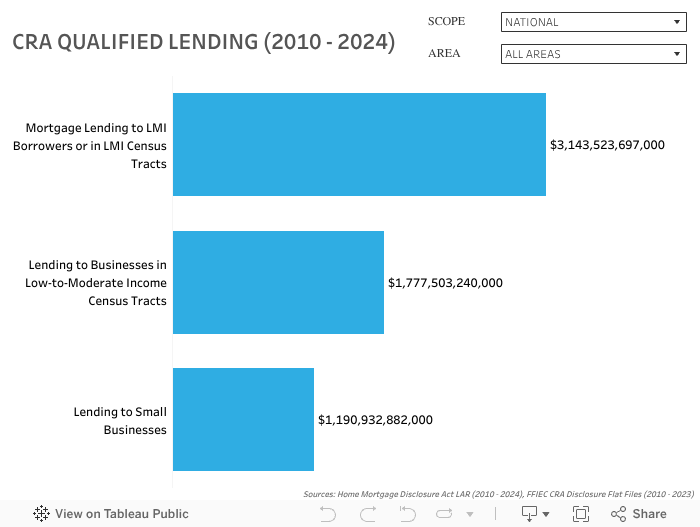
The Community Reinvestment Act (CRA) has been a pivotal piece of civil and economic rights legislation since its enactment in 1977. It is responsible for working-class borrowers and neighborhoods across the country receiving nearly $5 trillion in qualifying mortgages and small business loans from 2010-2024.
CRA has had bipartisan support since the beginning because it puts power in the hands of communities and encourages relationship-building among community stakeholders.
On July 31, the OCC and FDIC announced a new proposed rule that would drastically weaken banks’ obligations to invest, lend and provide services in low- and moderate-income (LMI) communities, while reducing transparency and accountability.
The proposal will reclassify what it means to be a “small” or “intermediate” bank by significantly increasing each category’s asset threshold. With fewer banks failing under CRA requirements, community development, affordable housing and data on small business lending could be drastically reduced.
Congress just passed the Road to Housing Act to expand housing supply, while the administration is simultaneously advancing regulatory changes that could reduce the very capital needed to build those homes.
Any new rules should help working-class communities and communities of color, not make things worse for them.
The timing of the new proposed rule isn’t just bad and tone-deaf in the middle of an affordable housing crisis. It’s cruel and dangerous.
It’s absurd to weaken the Community Reinvestment Act. It has driven trillions of dollars in investments to communities all across America. Millions of Americans are currently struggling to make ends meet.. We don’t need to double down with bad rules that will reduce affordable housing and make it harder for small businesses to grow and hire more people.
Billions of dollars in bank loans, investments and philanthropy that should go to working-class neighborhoods could wind up going elsewhere.
These proposed changes will allow banks to do less for poor communities and communities of color.
CRA is supposed to make sure banks serve their entire communities, not just their wealthiest
The fact that all three bank agencies cannot agree on a single plan to modernize the CRA indicates that there are problems with this new proposal.
Any rule changes have to ensure that low- and moderate-income communities and communities of color have equal access to capital and credit.
Don’t let bank regulators use modernization as an excuse to weaken the law.
Banks are essential for local economies. They decide who gets mortgage and small business loans – and who doesn’t. Banks are also major sources of community development investment capital and philanthropic grants to local nonprofits. But there’s something else to bear in mind about banks: They also have a long, dark history and a well-documented recent record of discrimination. The CRA is designed to address this history and must remain strong.
Strong enforcement of CRA is still important for working-class communities and communities of color. When banks are not held accountable and required to serve all the communities where they take deposits, the result is neglect, disinvestment and discrimination.
When 98% of banks already pass their CRA exams, do we really need to make it easier for them? This is exactly what the rules proposed in July would do.
These attacks are not new, and neither is our response. For nearly three decades, NCRC has convened banks, community organizations, policymakers, and advocates from across the country to strengthen CRA and ensure it continues to serve families and communities. We will continue to provide the research, resources, and leadership needed to protect one of our nation’s most important community investment laws.
#TreasureCRA
#CRAworks
#JustEconomy
- CRA Homepage: www.ncrc.org/cra
- Key Takeaways and Why It Matters: www.ncrc.org/2026-cra-rollbacks
- New CRA Proposal: www.ncrc.org/new-cra-proposal-is-an-assault-on-working-class-communities
- The OCC and FDIC have proposed a new CRA rule that would fundamentally weaken bank obligations to invest in low- and moderate-income communities. The numbers tell the story clearly.
Approximately 814 banks would lose community development obligations entirely, a 40% reduction. More than 5,000 branches in LMI census tracts would lose separate accountability evaluations, representing 30% of all LMI branches nationwide.
This is not modernization. It is a rollback dressed up in regulatory language.
CRA has helped generate nearly $5 trillion in mortgages and small business loans from 2010-2024. The law works. What is being proposed would significantly diminish its reach at the exact moment communities need banks to show up most.
The public comment period is open. Read NCRC’s full analysis and make your voice heard before the deadline: ncrc.org/cra
#StopCRARollback #CRAworks #JustEconomy
- If you work in community development, affordable housing, small business lending or fair housing, the proposed 2026 CRA rule should concern you deeply.
Under the proposal, the large bank threshold rises to $10 billion. Banks below $1 billion would face no community development obligations at all. The banks in between $1 and $10 billion in assets would face a weaker combined test instead of the more rigorous separate evaluations the current rule requires. These banks would also no longer annually report their small business lending data.
The practical result: fewer banks accountable to more communities, with less data available to track whether the law is working.
As NCRC’s Jesse Van Tol put it: “CRA is supposed to put a thumb on the scale for working-class people. Now it lets hundreds of banks off the hook.”
If you agree, say so on the record. NCRC has everything you need to submit a comment, contact Congress and reach local leaders: ncrc.org/cra
#StopCRARollback #CRAworks #JustEconomy
- Transparency is not a bureaucratic burden. It is how we know whether the law is working.
The proposed CRA rule would eliminate 11% of small business lending data nationwide. In six states — Iowa, Louisiana, Maine, Mississippi, North Dakota and South Dakota — roughly 25% of that data would disappear entirely. Hundreds of banks in the $412 million to $1 billion range would no longer be required to report small business lending at all.
Less data means less accountability. It means communities, researchers and advocates lose the ability to identify gaps and hold banks responsible for filling them.
This is the kind of change that does not make headlines but reshapes what is possible for years to come. The comment deadline is approaching. ncrc.org/cra
#StopCRARollback #CRAworks #JustEconomy
- For practitioners, lenders, advocates and funders who believe in community reinvestment, here is what the proposed 2026 CRA rule means on the ground:
28 states would lose evaluations for at least one-third of their LMI-area bank branches.
22 states are at risk of losing oversight for at least one-third of branches in majority-people-of-color tracts
At least $2 billion in annual community development loans and investments is at risk of disappearing.
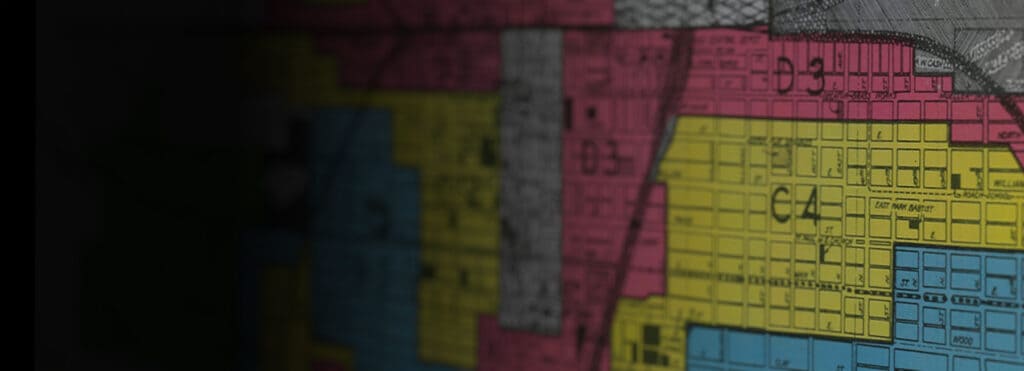
CRA was designed to correct discrimination called redlining that left entire neighborhoods without access to credit. The proposed rule does not fix those failures. It reduces the pressure on banks to address them.
NCRC has published a full breakdown of the rule’s impact. Read the analysis, use our interactive map to break down your state’s impacts, and then share it with your networks and submit a comment before the deadline: ncrc.org/cra
#StopCRARollback #CRAworks #JustEconomy
@USOCC and @FDICgov want to let 800+ banks off the hook for investing in low- and moderate-income communities. That is not modernization. That is abandonment. Tell them no. ncrc.org/cra #StopCRARollback #CRAworks #JustEconomy
5,000 bank branches in low-income neighborhoods. 4,000 in majority communities of color. All losing federal accountability under the proposed CRA rule. @USOCC @FDICgov this is not acceptable. #StopCRARollback #CRAworks #JustEconomy
CRA was passed in 1977 to end #redlining. From 2010-2024, it drove nearly $5 trillion in community investment. Now @USOCC and @FDICgov want to gut it. Submit your comment before the deadline: ncrc.org/cra #StopCRARollback #CRAworks #JustEconomy
The OCC and FDIC are proposing changes to the Community Reinvestment Act that would let more than 800 banks stop investing in working-class communities. That is a 40% cut in the banks required to reinvest where they do business. CRA was passed in 1977 to end redlining. We cannot allow it to be dismantled quietly through a rulemaking. Submit your public comment now and share this post so others know what is at stake: ncrc.org/cra #StopCRARollback #CRAworks #JustEconomy
Banks are supposed to serve all communities where they do business. That is the whole point of the Community Reinvestment Act. But the proposed 2026 rule would raise asset thresholds so high that hundreds of banks no longer have community development obligations at all. Tell regulators we will not stand by while one of the landmark laws of the civil rights era gets hollowed out: ncrc.org/cra #StopCRARollback #CRAworks #JustEconomy
Under the proposed CRA rule, 5,000 branches in low- and moderate-income neighborhoods would lose separate accountability evaluations. Banks would still be present in these communities. They just would not be required to prove they are actually serving them. That is exactly what CRA was designed to prevent. The comment period is open now: ncrc.org/cra #StopCRARollback #CRAworks #JustEconomy
From 2010-2024, CRA has helped generate nearly $5 trillion in qualified mortgages and small business loans in communities banks once refused to serve. The proposed rollback puts all of that at risk. We only have until the comment deadline to make our voices heard. Use the tools at the link below to tell regulators, your members of Congress and your local leaders: ncrc.org/cra #StopCRARollback #CRAworks #JustEconomy
800+ banks. That is how many would lose community development obligations under the proposed CRA rule. A 40% cut in the banks required to invest in low- and moderate-income communities. This is not reform. It is a rollback. The comment period is open. Link in bio. #StopCRARollback #CRAworks #JustEconomy #CommunityReinvestment #FairLending #AffordableHousing #EconomicJustice
CRA was passed in 1977 to end redlining. From 2010-2024, it has helped drive nearly $5 trillion in mortgages and small business loans in communities banks once refused to serve. Now federal regulators want to weaken it. We cannot let that happen. Comment before the deadline. Link in bio. #StopCRARollback #CRAworks #JustEconomy #Redlining #FairLending #CommunityDevelopment
“CRA is supposed to put a thumb on the scale for working-class people. Now it lets hundreds of banks off the hook.” — Jesse Van Tol, NCRC President and CEO. The proposed 2026 CRA rule is a step backward for every community that depends on banks to show up. Tell regulators you oppose it. Link in bio. #StopCRARollback #CRAworks #JustEconomy #WorkingClass #CommunityReinvestment
5,000 branches in low-income neighborhoods losing federal oversight. This affects real people in real communities. Your comment matters. Deadline is approaching. Link in bio. #StopCRARollback #CRAworks #JustEconomy #TakeAction #FairLending
(Click on the image to download)
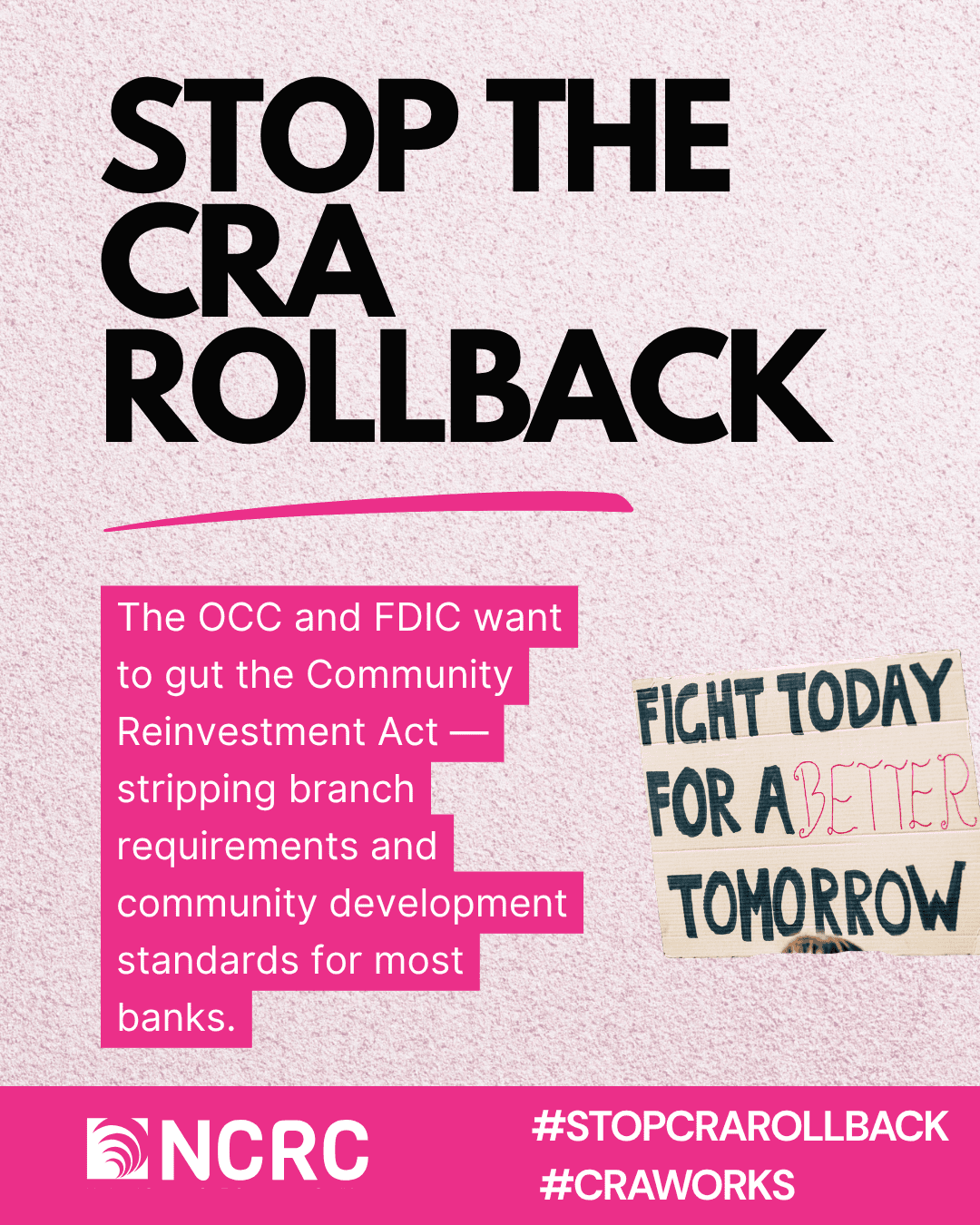
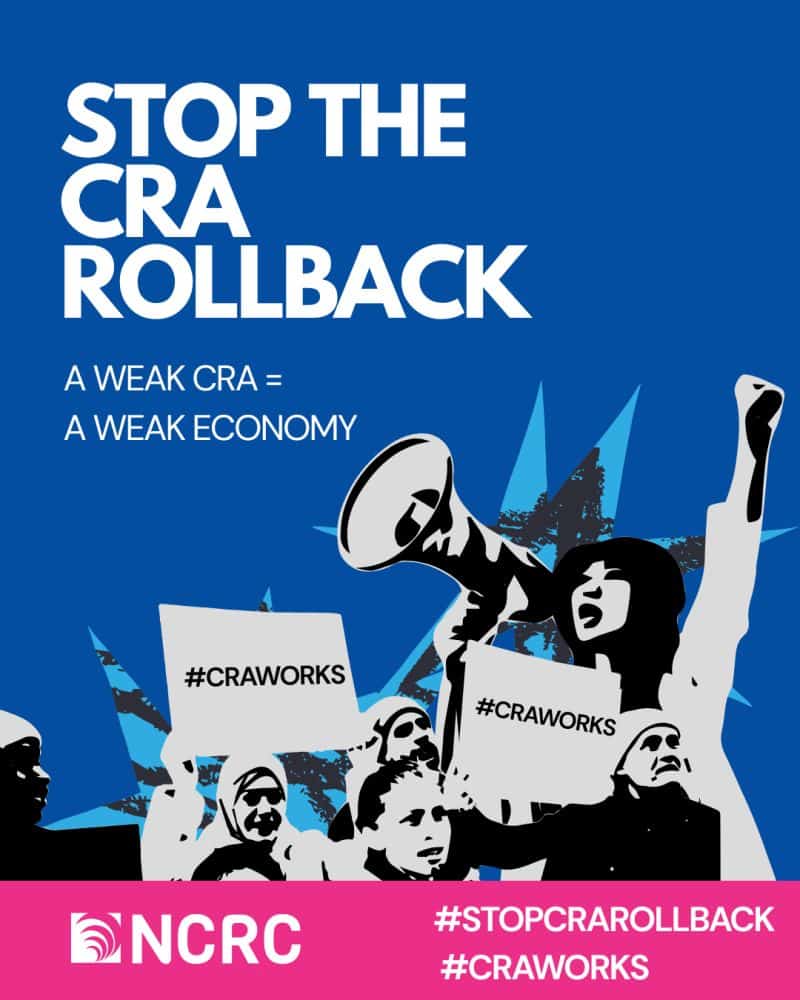
We’re counting on these people and organizations.
| X | ||||
| NCRC | @NCRC | @TheNCRC | @JustEconomy | |
| OCC | @USOCC | |||
| FDIC | @FDICgovC | @FDICgov | @FDICgov | |
| FED | @FederalReserve | @FederalReserve | @FederalReserveBoard |
Importance of local press
While many local news outlets continue to struggle, some are holding on and have attentive audiences. These local media providers can be an important channel to reach local supporters and leaders and an invaluable resource for community organizations trying to build momentum for a national law that seems at times more inside-the-beltway than community-focused. And for all the political games swirling around CRA reform right now – the people who will be most affected will be you and your neighbors. Let’s work together to get the word out – we will not let CRA be gutted – and together we can start a new movement to further a just economy for all.
There are several ways to get your point of view into local media:
- Contact a reporter and encourage them to write a news story about CRA
- Submit a guest column about CRA to an opinion section
- Send a letter to the editor about CRA
- Persuade an editorial board to write an editorial about CRA
How to reach out:
- Determine what local and regional media are available to you – online, newspapers, magazines, TV, radio, blogs, podcasts, Facebook, LinkedIn and Meetup groups. Even NextDoor or local email lists might be an option. Determine if they cover topics that fall under CRA (banking, lending, housing, community development, economic development, community benefits…etc).
- Find the appropriate reporter. It could be someone who covers local business and banking, or housing, development, urban renewal, poverty, discrimination or social services. Study their work. Find connections with your work.
Formulate your pitch. Send via email. Follow up by phone if you don’t get a response. Being able to put your face with your name will help you build the relationship. Attend press events or ask to meet up for coffee and make your pitch then. - Local reporters are busy; they don’t have a lot of time for coffee and conversation. When you get responses, be sure to respond asap.
If a reporter likes your pitch, be sure to help find sources and set up interviews, preferably with members of your organization and/or community. - Once published, be sure to share far and wide with your entire network, including with NCRC.
Sample Pitch:
Bank regulators in Washington have proposed rule changes to the Community Reinvestment Act, a law enacted in 1977 to get rid of discrimination that was once common in mortgage and small business lending by banks. Redlining was once widespread across America, and it happened here too. It kept capital out of neighborhoods where minorities and immigrants lived. CRA was passed to put a stop to that.
But discrimination in lending is still a problem. This law has a direct impact on [city / our community]. Our local banks make mortgage and small business loans, as well as grants to local nonprofits, in order to comply with the law. The proposed changes could have a big impact here, especially on low- and moderate-income people. Would you be interested in writing about this issue and why it matters to our community? If so, I’d love to share more info with you.
OpEd’s:
OpEd’s are another way to get local press coverage. Here you write an opinion piece and then shop it around to local papers and magazines. Most outlets have their own requirements, so be sure to check with them before you write and pitch your piece.
Suggested Content:
We suggest you start your OpEd off with local impacts. What has CRA done for your community in the past? How will the proposed changes halt these investments? Use our interactive map to identify how your community will be impacted, and then use some of our talking points below to further bring home the point that these proposed changes are disastrous for our underserved communities.
Proposed CRA Rule Changes Disastrous for Your Community:
All parties invested in the Community Reinvestment Act (CRA) – bankers, regulators, community leaders and watchdog groups – have agreed for some time that CRA was in need of modernization to reflect changes in how people access banking services today, as opposed to in 1977 when the act was first enacted. However, there is no doubt that the proposed changes from the Office of the Comptroller of the Currency (OCC) and the Federal Deposit Insurance Corporation (FDIC) would greatly diminish the effectiveness of the law and do a terrible job of addressing our mutual concerns. Instead, the agencies came up with ways for banks to do less for lower-income neighborhoods and borrowers, and a host of complex and confusing options.
When 98% of banks already pass their CRA exams, do we really need to make it easier for them? This is exactly what the rule proposed in July would do. The proposal would jeopardize more than 5,000 bank branches in low- and moderate-income communities or approximately 30% of all branches in those communities. Twenty-eight states could lose CRA scrutiny for at least one-third of their branches in low- and moderate-income tracts, and 22 states could lose it for at least one-third of branches in majority-people-of-color tracts.
It would raise the “small bank” threshold from $412 million to $1 billion, eliminating community development evaluations for roughly 814 banks, or about 40% of the banks currently subject to that requirement. The share of all banks with community development responsibilities would fall from roughly half to less than one-third. It would also reclassify another 417 banks by raising the “intermediate small bank” threshold from $1.649 billion to $10 billion. As a result, only the largest 6% of banks would face separate reviews of their community development loans and investments and branch services, or CRA small-business loan reporting requirements.
The proposal would also eliminate 11% of CRA small-business lending data nationwide. Six states—Iowa, Louisiana, Maine, Mississippi, North Dakota and South Dakota—would lose nearly one-quarter of their data.
The proposal would also eliminate 11% of CRA small-business lending data nationwide. Six states—Iowa, Louisiana, Maine, Mississippi, North Dakota and South Dakota—would lose nearly one-quarter of their data.
[Use our interactive map to see how your state will be affected by the proposed CRA rollbacks. Add that information here.]
There is no doubt that these proposed changes would diminish the effectiveness of a law that was desperately needed when it was enacted and which remains essential to ensure banks meet the credit needs of all communities where they take deposits, not just the wealthy ones.
The regulators violate cardinal principles of rulemaking in terms of both fulfilling their statutory responsibilities under CRA and not proposing a rule based on clear and transparent data analysis. The FDIC and OCC need to discard the notice of proposed rulemaking in order to prevent halting and reversing the progress that CRA has made in incentivising reinvestment in underserved communities.
COMING SOON